
Securing a UAE residence visa is your first step to living and working in this dynamic hub. This comprehensive guide simplifies the entire process for 2026, detailing the different visa types, their costs, and the step-by-step application procedure. Whether you’re an employee, investor, or entrepreneur, discover how to successfully obtain your UAE residence visa.
What is a UAE Residence Visa?
A UAE residence visa is a permit that allows foreign nationals to live legally in the United Arab Emirates for a set period, typically for work, investment, retirement, or study. It is a requirement for expatriates to live in the UAE and can be obtained through various pathways, such as employment, real estate investment, or family sponsorship. Common types include work visas, investor visas, student visas, family visas, and the long-term Golden Visa.
Key Benefits of a UAE Residence Visa
Obtaining a Dubai residence visa provides access to a wealth of opportunities and a superior quality of life.
- Sponsor Your Family: Bring your spouse, children, and parents to live with you.
- Unlock Career Opportunities: Legally work and access the UAE’s thriving job market.
- Financial Freedom: Open bank accounts with ease and access loans and credit facilities.
- World-Class Services: Gain access to the UAE’s premium healthcare and education systems.
- Zero Income Tax: Enjoy one of the biggest financial benefits, no personal income tax.
- Long-Term Stability: Options like the Golden Visa provide 10-year security without the need for an employer sponsor.
Types of UAE Residence Visas in 2026
Understanding the various residency visas is crucial to choosing the right path for you.
- Employment Visa: Issued to individuals who have secured a job with a UAE-based company. The employer acts as the sponsor, and the visa is typically tied to the employment contract, with a standard validity of two to three years.
- Investor Visa: This visa is for entrepreneurs and business partners who establish or invest in a company in the UAE. It can also be obtained through real estate investing with a minimum investment threshold. This version is a self-sponsored visa, offering greater independence.
- Golden Visa: A long-term, self-sponsored residence visa valid for 5 or 10 years. It targets investors, entrepreneurs, individuals with exceptional talents, researchers, and outstanding students. The Golden Visa provides unparalleled stability and eliminates the need for a sponsor.
- Green Visa: A relatively new category offering a 5-year self-sponsored residency to skilled professionals, freelancers, and investors. The Green Visa is designed to attract and retain talented individuals, providing more flexibility than a standard employment visa.
- Student Visa: Granted to international students enrolled in accredited educational institutions within the UAE. The visa is sponsored by the institution or a parent and is valid for the duration of the academic program.
- Family Visa: Allows UAE residents who meet a minimum salary requirement to sponsor their immediate family members, including spouse, children, and, under certain conditions, parents.
- Retirement Visa: Designed for retirees aged 55 and above who meet specific financial criteria, such as having a substantial monthly pension or significant savings. This visa offers a renewable five-year residency to enjoy retirement in the UAE.
Read More: Types of Residency Visas in the UAE
UAE Residence Visa Process: Step-by-Step Guide for 2026
Follow this clear, step-by-step process to navigate your UAE residence visa application smoothly.
Step 1: Determine Your Eligibility and Visa Type
The first step is identifying which visa category you fit into based on your purpose (work, investment, study, or family). At Shuraa, our experts provide a free eligibility assessment to ensure you apply for the correct visa from the start.
Step 2: Secure a Sponsor
Your sponsor can be an employer, a university, a family member, or yourself (for self-sponsored visas like the Golden or Green Visa).
Step 3: Apply for an Entry Permit
Your sponsor initiates the process by applying for your entry permit, which allows you to legally enter the UAE to complete the residency formalities.
Step 4: Undergo medical testing and apply for an Emirates ID.
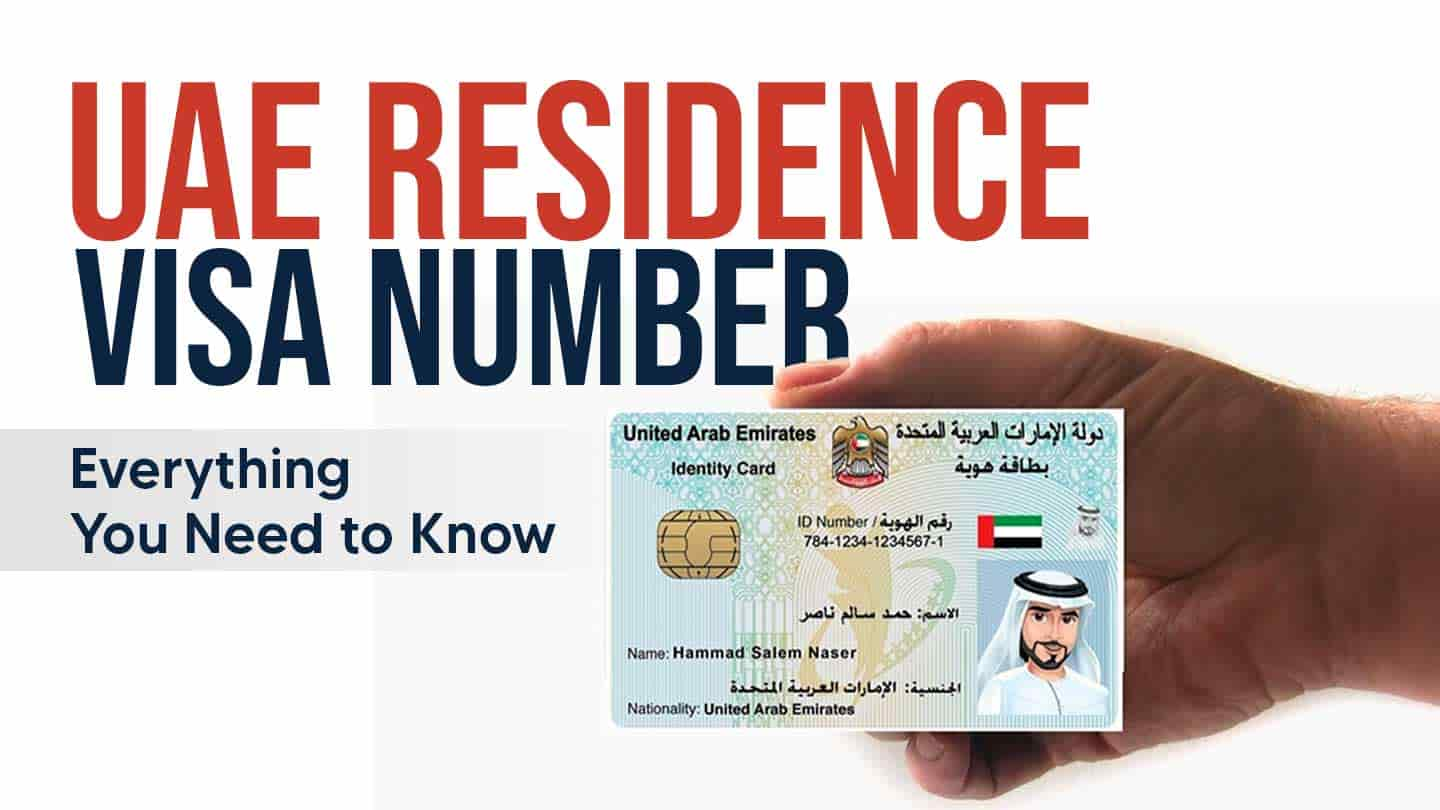
Once in the UAE, you must pass a medical fitness test at an approved centre and submit your application for Emirates ID, a mandatory identity card for all residents.
Step 5: Submit Documents for Visa Stamping
After clearing the medical test, your sponsor submits your passport and all required documents to the relevant immigration authority (GDRFA or ICP) for the residence visa stamp.
Step 6: Collect Your Emirates ID
Once your visa is stamped, you can collect your physical Emirates ID card, finalising your status as a UAE resident.
Required Documents for a UAE Residence Visa
While specific requirements may vary, you will generally need the following for your residence visa application:
- Original Passport (with minimum 6-month validity)
- Passport-sized photographs with a white background
- Complete the visa application form.
- Entry Permit copy
- A medical fitness test certificate
- Proof of Health Insurance
- The Emirates ID application form
Additional documents specific to your visa type: employment contract, company trade license, property ownership documents, or attested marriage/birth certificates for family sponsorship.
Expert Tip from Shuraa: Document requirements can vary by emirate and visa type. Missing or incorrect documents are a leading cause of rejection. Let our team manage your document checklist to ensure a smooth, error-free application.
UAE Residence Visa Cost for 2026: A Detailed Breakdown
Understanding the cost of a UAE residence visa is crucial for your budgeting. The total expense is not a single fee but a combination of government charges, which vary based on the visa’s duration, type, and the emirate you apply in.
Here is a clear breakdown of the estimated costs for different UAE residence visas in 2026.
Government Fee Components:
The total cost is typically the sum of the following:
- Application/Issuance Fees: AED 100–500
- Emirates ID Fee: AED 100–300
- Medical Test Fee: AED 250–500
- Visa Stamping Fee: AED 500–1,000
- Health Insurance: AED 1,000–5,000+ (annually)
Estimated Total Cost by Visa Type:
- 2-Year Residence Visa: A standard two-year employment visa costs around AED 3,500* without insurance. With a basic health insurance plan, the total cost of a 2-year residence visa typically rises to approximately AED 4,200* to AED 6,000*.
- 3-Year Residence Visa: For a three-year visa, expect to pay about AED 3,700* without insurance. The all-inclusive cost, with health insurance, is generally around AED 5,472*.
- 5-Year Residence Visa (Green Visa): The 5-year residence visa, known as the Green Visa, involves government fees typically between AED 3,000* and AED 5,000*, plus mandatory costs for the medical test and Emirates ID.
- UAE Family Visa Cost: The government fees for sponsoring one dependent on a two-year UAE family visa start at approximately AED 2,200*, excluding their separate health insurance policy.
Cheapest Residence Visa: The most affordable long-term option is typically a one-year visa, with total costs starting from approximately AED 3,000* to AED 4,000*, excluding insurance.
Disclaimer: These are estimated figures. The final cost depends on the emirate, the typing center’s charges, and the insurance plan. Contact Shuraa for a precise, no-obligation cost breakdown tailored to your situation.
Renewing vs. Cancelling Your UAE Residence Visa
How to Renew Your Visa
The renewal process mirrors the initial application, often requiring a new medical test and Emirates ID. Your sponsor must initiate the renewal before the current visa expires to avoid fines. For self-sponsored visas, you are responsible for ensuring timely renewal.
How to Cancel Your Visa
If you are leaving a job or the country, your visa must be formally cancelled. This involves clearing all financial dues, cancelling any dependent visas first, and submitting a cancellation request to the immigration authority through your sponsor.
Common Pitfalls to Avoid When Applying
- Incorrect Visa Type: Applying under the wrong category leads to automatic rejection.
- Insufficient Passport Validity: Your passport must be valid for at least 6 months to enter and 3 months to renew a residence visa.
- Inadequate Health Insurance: Not having a policy that meets the emirate’s specific minimum requirements.
- Overstaying an Entry Permit: Failing to complete the medical test and visa stamping within the entry permit’s validity period results in heavy fines.
Why Choose Shuraa Business Setup for Your UAE Residence Visa?
Navigating the UAE immigration system can be complex. Here’s why hundreds of clients trust Shuraa:
- Two Decades of Expertise: We have over 26 years of experience in UAE business setup and visa processing, with an in-depth understanding of GDRFA and ICP regulations.
- End-to-End Service: From determining the right visa for you to document collection, medical test coordination, and final stamping, we handle it all.
- Proven Track Record: We have successfully assisted thousands of clients in securing their residence visas, from employment visas to complex Golden Visas.
- Dedicated PRO Service: Our team of PROs works directly with government departments, saving you time and eliminating the hassle of long queues.
- Transparent Pricing: No hidden fees. We provide a clear breakdown of all government and service charges upfront.
Ready to secure your future in the UAE? Let Shuraa simplify the journey.
Get Your Free Consultation Now!
Call: +971 4 408 1900 | WhatsApp: +971 50 777 5554 | Email: info@shuraa.com
Related Posts
- How to Start a Business in Dubai: A Step-by-Step Guide
- UAE Golden Visa: 10-Year Residency Requirements
- How to Get an Emirates ID: Process & Requirements
- Opening a Corporate Bank Account in the UAE
Conclusion
Securing a UAE residence visa is a transformative step towards unlocking a life of opportunity, stability, and growth in one of the world’s most dynamic regions. While the process may seem detailed, having a clear understanding of the types, requirements, and steps involved, as outlined in this guide, makes it entirely manageable. For a seamless and error-free experience, partnering with seasoned experts like Shuraa Business Setup can save you valuable time and ensure your application is successful from the start. Your new life in the UAE awaits.
Frequently Asked Questions (FAQs)
1. What is the UAE residence visa processing time?
The standard processing time for a UAE residence visa is typically 5 to 10 working days after the complete submission of all required documents. However, this timeline can vary depending on the specific emirate (e.g., Dubai, Abu Dhabi), the type of visa (e.g., a Golden Visa may take longer due to additional checks), and the current volume of applications at the immigration authority.
2. What is the passport validity required to enter the UAE with a residence visa?
If you are entering the UAE and already have a residence visa stamped on your passport, it must be valid for at least 3 months from your date of arrival. For initial entry on a new visa, a 6-month validity is often recommended.
3. What is the difference between an entry permit and a residence visa?
An Entry Permit is your key to enter the UAE for a specific purpose, such as starting a new job or joining family. It is typically valid for 60 days and is not renewable.
A Residence Visa is what you obtain after you enter the country. It is stamped on your passport and grants you the legal right to live, work, and reside in the UAE for a longer period (1–10 years). The entry permit is the first step; the residence visa is the final goal.
4. What is the cheapest residence visa in the UAE?
The most affordable option is generally a one-year employment visa, with total government and processing costs starting from approximately AED 3,000 to AED 4,000. This base cost typically excludes health insurance, which is a mandatory additional expense. The final cost depends on the emirate and sponsor.
5. What is the cost of a two-year Dubai residence visa?
The total cost for a standard 2-year employment residence visa in Dubai is approximately AED 3,500 to AED 4,500, excluding health insurance. With a basic health insurance plan, the total cost can range from AED 4,200 to AED 6,000. This includes all government fees for application, issuance, medical testing, and Emirates ID.
6. What are the UAE residence visa renewal fees for 2026?
Renewal fees are similar to the initial application costs. For a standard 2-year visa, expect to pay between AED 3,000 and AED 4,000, which covers the renewal of the residence visa itself and the Emirates ID. This does not include the cost of a new medical test (if required) or health insurance premiums, which must be paid annually.
7. Can I get a UAE residence visa without a job?
Yes, you can get a UAE residence visa without a job through options like investing in property, setting up a business, being sponsored by a family member, or applying for specific visas for remote workers, retirees, or students. These visas have different eligibility criteria based on income, investment, or other qualifications.
8. How can I get a 5-year or 10-year residence visa in the UAE?
You can obtain long-term residency through these primary pathways:
- Golden Visa (10 years): Available to investors in public investments (AED 2M+), real estate investors (AED 2M+), entrepreneurs, exceptional talents, and outstanding students.
- Green Visa (5 years): For skilled employees (with a valid employment contract and a minimum educational level), freelancers, and investors.
- Investor Visa (5 years): For business partners or shareholders in a UAE-based company.
9. What is the process for a UAE residence visa for divorced women or widows?
Women in this situation are eligible for a one-year visa extension without the need for a new sponsor, provided they were previously sponsored by their husband. They must apply for this special permit before their current visa expires and submit documents including an attested divorce decree or death certificate, proof of residence, and valid health insurance. The extension provides crucial time to secure alternative residency.
10. Can I travel outside the UAE while my residence visa is in process?
It is highly discouraged. During the final stage of the process, your original passport is typically required by the authorities for visa stamping. If you need to travel urgently, you can request your passport back, but the government will pause and potentially cancel your application. It is best to complete the entire process, including receiving your Emirates ID, before making travel plans.
11. How can I download my UAE residence visa copy online?
You can easily download an electronic copy through official government portals:
- For visas issued in Dubai, use the GDRFA Dubai website or app.
- For visas issued in other emirates (or nationwide), use the ICP (Federal Authority for Identity, Citizenship, Customs and Port Security) Smart Services system. You will need your passport number, passport expiry date, and nationality to access the file.
12. What happens if my UAE residence visa expires?
If your visa expires, you begin to accrue overstay fines for each day you remain in the country illegally. These fines can be significant. Furthermore, you may face difficulties renewing your driver’s license and accessing banking services and could potentially be banned from re-entering the UAE. It is critical to renew your visa before its expiry date or formally cancel it and leave the country.
13. How do I check my UAE residence visa status?
You can check your visa status and validity online:
- For Dubai: Visit the GDRFA Dubai website and use the “Residency Validity” service.
- Nationwide: Visit the ICP Smart Services website and use the “File Validity” inquiry service. You will need your residence file number (found on your visa or Emirates ID) or your passport details to verify the status.
Disclaimer: The information in this post is for general guidance only and may change at any time. We try to keep it accurate, but Shuraa cannot guarantee that all details are complete or up-to-date. The final authority on rules and fees is the government. For the latest, personalised advice, please speak with our experts or the relevant government departments.