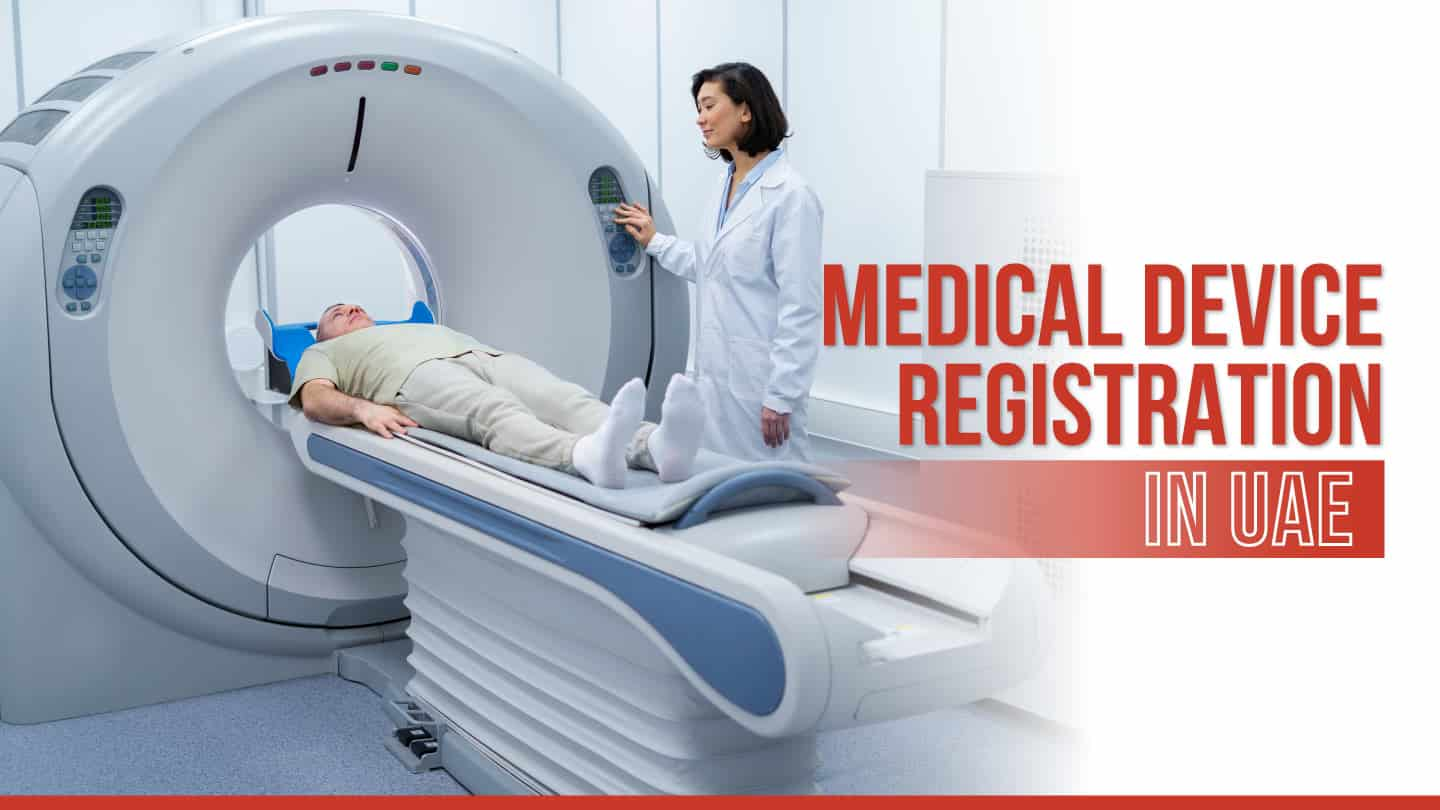
The UAE is among the most preferred destinations for medical device companies looking to grow in the Middle East. And due to a growing population and a huge focus on medical tourism, the country is investing billions into modernising its hospitals and clinics. For medical device manufacturers, this means a massive opportunity. Whether you produce high-tech diagnostic tools or everyday hospital supplies, the UAE is a hungry market looking for the best technology the world has to offer.
However, before any medical device can be sold or distributed in the UAE, it must go through an official registration process approved by the Ministry of Health and Prevention (MOHAP). Medical device registration in the UAE helps make sure that all medical devices used in the country are safe, reliable, and meet quality standards.
If the thought of regulatory paperwork feels overwhelming, don’t worry. Here’s the simplified process to give you a clear roadmap to success.
Medical Device Regulations in the UAE
Medical devices in the UAE are regulated at the federal level by the Ministry of Health and Prevention (MOHAP). MOHAP is the only authority authorised to approve, register, and monitor medical devices in the country.
However, in recent years, many of MoHAP’s regulatory tasks have transitioned to the newly established Emirates Drug Establishment (EDE). The EDE is now becoming the central hub for the registration and supervision of all medical products, including pharmaceuticals and medical devices.
MOHAP is responsible for:
- Approving medical devices before they are imported or sold in the UAE.
- Ensuring devices meet international safety and quality standards.
- Regulating manufacturers, distributors, and local authorised representatives.
- Monitoring compliance throughout the product’s lifecycle.
The Registration and Drug Control Department (DCD):
Within the federal framework, the Registration and Drug Control Department (DCD) is the specific office that rolls up its sleeves and does the technical work. Their role includes:
- Product Evaluation: Reviewing your technical files, clinical data, and safety certificates.
- Classification: Formally confirming whether your device is Class I, II, III, or IV.
- Site Inspections: Ensuring the manufacturing facility meets international Quality Management Systems (like ISO 13485).
- Issuing Medical Device Licensing: Providing the final registration certificate that allows your product to enter the market.
Role of Local Health Authorities (DHA & Department of Health – Abu Dhabi):
A common point of confusion for newcomers is the role of local authorities like the Dubai Health Authority (DHA) or the Department of Health – Abu Dhabi (DoH). While MoHAP (and now the EDE) governs the product registration for the whole country, local authorities manage the healthcare providers and facilities within their specific cities.
| Authority | Scope | Primary Responsibility |
|---|---|---|
| MoHAP / EDE | Federal (All UAE) | Registering the device itself and the manufacturer. |
| DoH (Abu Dhabi) | Local (Abu Dhabi) | Licensing hospitals and doctors in Abu Dhabi. |
| DHA (Dubai) | Local (Dubai) | Licensing clinics and medical staff in Dubai. |
What Is Considered a Medical Device in the UAE?
In the UAE, a product is classified as a medical device based on what it is intended to be used for, rather than how it looks or how complex it is. If a product is meant to support medical care or health-related decisions, it is likely to fall under the medical device category and must be registered with MOHAP.
How Is a Medical Device Defined?
A medical device generally includes any instrument, equipment, software, implant, or material that is intended for use in humans for purposes such as:
- Diagnosis of diseases or medical conditions.
- Prevention of illness or injury.
- Monitoring of health conditions or vital functions.
- Treatment or management of diseases or injuries.
- Support or replacement of body functions.
Unlike medicines, medical devices typically do not achieve their main purpose through chemical action inside the body.
Common Examples of Medical Devices:
Medical devices cover a wide range of products, from simple tools to advanced equipment, including:
- Low-risk items such as bandages, gloves, thermometers, and syringes.
- Medium-risk devices like infusion pumps, blood pressure monitors, and diagnostic equipment.
- High-risk devices such as surgical instruments, implants, pacemakers, and life-support systems.
What About In Vitro Diagnostic (IVD) Devices?
In Vitro Diagnostic (IVD) devices are products used to examine samples such as blood, urine, or tissue taken from the human body. These devices help diagnose or monitor medical conditions, but are not used directly on the body.
Examples include:
- Blood glucose testing kits.
- COVID-19 or infectious disease test kits.
- Laboratory reagents and analysers.
While the registration process for IVDs is very similar to regular medical devices, they have their own specific classification system (Class A to D) based on how much risk an incorrect test result would pose to a patient or the public.
Medical Device Classification in the UAE
Medical devices are classified using a risk-based system. This means the level of regulatory control depends on how much risk a device may pose to patients and users. The higher the risk, the more detailed the review and documentation required by MOHAP.
The Ministry of Health and Prevention (MoHAP) and the Emirates Drug Establishment (EDE) categorise medical devices into four main classes:
Class I (Low Risk):
- These are non-invasive devices that have very little contact with the body. Because they are low-risk, they often follow a simplified listing route rather than a full registration.
- Examples: Stethoscopes, manual wheelchairs, surgical bandages, and tongue depressors.
Class II (Moderate Risk):
- This category is often split into IIa (low-to-moderate) and IIb (moderate-to-high). These devices might be invasive for a short time or involve more complex technology.
- Examples: Ultrasonic diagnostic equipment (IIa), infusion pumps (IIb), and surgical gloves.
Class III (High Risk):
- These devices are typically invasive or used for long-term treatment. They require deep technical review.
- Examples: Orthopaedic implants and hemodialysis machines.
Class IV (Highest Risk/Critical):
- These are life-sustaining or life-supporting devices. They undergo the most intensive evaluation process.
- Examples: Pacemakers, heart valves, and neurological catheters.
Classification for IVDs (Classes A–D)
If you are registering In Vitro Diagnostic (IVD) devices, the system is similar but uses letters instead of numbers. The logic remains the same:
- Class A: Low individual and public health risk (e.g., laboratory reagents).
- Class B: Moderate individual risk or low public health risk (e.g., pregnancy self-tests).
- Class C: High individual risk or moderate public health risk (e.g., blood glucose tests).
- Class D: High individual and public health risk (e.g., HIV or Hepatitis screening tests).
Correct classification is a critical step in the UAE medical device registration because it determines the type and depth of technical documentation required, the level of regulatory evaluation by MOHAP, and approval timelines and processing complexity.
Who Should Register Medical Devices in Dubai?
Medical device registration in Dubai and across the UAE is mandatory for any business involved in bringing medical devices to the market. This applies not only to manufacturers, but also to companies handling import, distribution, and trading activities.
This requirement applies to:
- Medical device manufacturers: Local and international manufacturers planning to sell or supply their medical devices in the UAE healthcare market.
- Foreign companies without a UAE presence: Overseas manufacturers must appoint a local authorised representative in the UAE to manage registration, communication with MOHAP, and post-market compliance.
- Distributors and importers: Businesses responsible for importing and distributing medical devices within Dubai and other emirates must ensure the products are properly registered.
- Healthcare suppliers and traders: Companies involved in supplying devices to hospitals, clinics, pharmacies, or laboratories, including those setting up a medical equipment trading business in Dubai, are required to comply with MOHAP registration rules.
- IVD manufacturers and suppliers: Businesses dealing in diagnostic kits, reagents, and laboratory testing devices must also follow the medical device or IVD registration process.
How to Register a Medical Device in the UAE
The medical device registration process in the UAE is increasingly moving through the Emirates Drug Establishment (EDE) portal, which has taken over many of the duties previously handled by MoHAP to make approvals faster and more efficient.
To register a medical device in the UAE, follow these steps:
If your manufacturing facility is outside the UAE, you must appoint a local partner. This partner must be a UAE-based company with a valid Medical Store License or Scientific Office License from the health authorities. They act as your legal liaison with the government, handle the submission, and are responsible for the device’s safety once it’s on the market.
Before you can register a specific product, the government needs to approve the place where it is made. You’ll need to submit a Site Master File, a valid ISO 13485 certificate, and a Legalised Manufacturing License from your home country. The process typically takes 14 to 28 working days.
If you aren’t 100% sure if your product is a Class II or Class III device, you can apply for an Official Classification. The EDE/MoHAP will review your product’s intended use and ingredients and give you a formal letter. This saves you from paying the wrong fees or submitting the wrong documents later.
The next step is to compile a complete registration file. Here are the general UAE medical device registration requirements:
- Medical device application form
- Technical documentation and product specifications
- Quality management certificates (e.g., ISO 13485)
- Certificate of Free Sale (attested)
- Product labelling, instructions for use, and packaging details
- Agency agreement with the local authorised representative
Your local representative will log into the EDE/MoHAP e-portal using a UAE PASS to submit the full technical dossier. For higher-risk devices, this includes clinical data, safety reports, and Free Sale Certificates (proof that you are already selling the device in other major markets like the US or EU). You’ll pay an initial application fee (approx. 100 AED) and a registration fee (often around 5,000 AED per device).
The application is sent to a technical committee of experts. They will:
- Check if all documents are complete.
- Review the safety and efficacy of the device.
It is very common for the committee to ask for “clarifications.” You usually have 30 days to respond to these queries.
Once the committee is satisfied, the Ministerial Committee gives the final sign-off. You will receive a Medical Device Registration Certificate, which is usually valid for 5 years.
Even with a registration certificate, you need an Import Permit for every shipment that enters the country. Your local representative handles this through the same online portal, and it is usually approved within a few days.
Cost of Medical Device Registration in the UAE
The Emirates Drug Establishment (EDE), which has now taken over these services from MoHAP, has a standardised fee structure. Note that fees are usually paid per product or per family of products.
| Service Type | Estimated Fee (AED) | Notes |
|---|---|---|
| Product Classification | 500 AED | Recommended if you are unsure of your device class. |
| Application Fee | 100 AED | Paid at the time of initial submission. |
| Device Registration | 5,000 AED | The main fee for a 5-year registration certificate. |
| Import Permit | Free / Variable | Usually, a small fee or free depending on the quantity/type. |
Keep in mind, the cost of medical device registration in the UAE can vary depending on several factors, such as the device’s risk classification, the type of product, and whether professional support is involved. While MOHAP fees are fixed, additional costs may apply throughout the registration lifecycle.
Why is Medical Device Registration Important?
Medical device registration is a key requirement for entering and operating in the UAE healthcare market. It helps protect patients, supports healthcare providers, and ensures businesses operate legally and smoothly.
1. Protects Patient Safety
Registration ensures that only medical devices meeting MOHAP’s safety and performance standards are allowed in the UAE. This reduces the risk of faulty or unsafe products reaching patients and healthcare professionals.
2. Maintains Quality and Compliance
Through the registration process, MOHAP reviews technical documents, quality certifications, and manufacturing practices. This helps maintain consistent quality standards across all medical devices sold in the country.
3. Allows Legal Import and Sale
Without MOHAP approval, medical devices cannot be imported, sold, or distributed in the UAE. Registration is mandatory for customs clearance and for supplying devices to hospitals, clinics, and pharmacies.
4. Builds Trust with Healthcare Providers
Hospitals, clinics, and laboratories prefer working with registered suppliers. Having a registered medical device increases credibility and makes it easier to establish long-term business relationships.
5. Prevents Penalties and Business Disruptions
Non-compliance can lead to fines, shipment rejections, product bans, or recalls. Proper registration helps businesses avoid these risks and operate without interruptions.
6. Supports Long-Term Market Presence
Registration is not just for market entry, it supports ongoing operations through renewals, updates, and post-market compliance, helping businesses grow sustainably in the UAE.
Validity, Renewal, and Amendments
Once you’ve successfully registered your medical device, your work doesn’t end there. To keep your product on the market, you must stay on top of its expiration date and notify the authorities of any significant changes. These processes are primarily managed through the Emirates Drug Establishment (EDE) portal.
Registration Validity Period:
A standard UAE Medical Device Registration Certificate is valid for five years from the date of approval.
Important Note: For certain high-risk devices (Class III and IV), you are required to submit Post-Market Surveillance (PMS) reports every two years to prove the device remains safe for public use. Failure to submit these reports can result in the suspension of your license before the five-year mark.
When and How to Renew:
You should start the renewal process at least 3 to 6 months before your certificate expires. If your registration lapses, you may have to stop importing the product until the renewal is granted.
Your Local Authorised Representative (AR) will submit a renewal application through the EDE portal. You will need to provide:
- The original registration certificate.
- Updated ISO 13485 and Free Sale Certificates (legalised).
- A summary of any safety incidents or recalls from the past five years.
Making Changes (Amendments):
The UAE government needs to know if the profile of your device changes. These are called Variations, and they fall into two categories:
A. Minor Variations (Notification)
Some changes are small enough that you only need to notify the EDE. These usually don’t stop your sales.
Examples: Minor label layout changes (that don’t change the meaning), changing the local distributor’s address, or minor software “bug fixes” that don’t change the device’s function.
B. Major Variations (Re-approval Required)
Significant changes require a formal review and a new approval. You cannot ship the new version of the product until this is approved.
- Manufacturer Changes: If you move your manufacturing to a new factory or add a new production line.
- Labelling/Intended Use: If you want to claim the device treats a new condition or if you make major changes to the safety warnings.
- Design/Material Changes: If you change a critical component or the material of an implant (e.g., switching from titanium to a new polymer).
- Company Ownership: If the brand owner or the manufacturing company is sold or changes its legal name.
Renewal and Variation Costs:
Registration isn’t a one-time event. You’ll need to account for maintaining your license:
- Renewal Fees: Every 5 years, you must renew your registration. The government fee is typically 2,500 AED (roughly 50% of the initial cost), plus any service fees from your local representative.
- Variation Fees: If you change your manufacturing site, change the product name, or make minor technical updates, you must file a Variation. These fees typically range from 2,000 to 5,000 AED, depending on whether the change is considered minor or major.
Post-Market Obligations
Manufacturers and their local authorised representatives must actively monitor the performance of their medical devices after approval. Any adverse events, malfunctions, or safety incidents that could affect patient or user safety must be reported to MOHAP within the specified timelines. This includes:
- Serious Incidents (Death or Serious Injury): These must be reported within 10 days (or as little as 48 hours if there is a major public health risk).
- Other Malfunctions: General technical issues that could have led to an injury must be reported within 30 days.
- Periodic Safety Reports: For high-risk devices (Class III and IV), you are often required to submit a Periodic Safety Update Report (PSUR) every two years. This is a summary of all global feedback and safety data for your device.
Ready to Register Your Medical Device in the UAE?
Medical device registration in the UAE can look confusing at first, but once the steps are clear, it’s actually very doable. Things like device classification, documentation, approvals, and ongoing compliance all need attention, but starting early makes a big difference. Having the right support also takes a lot of pressure off.
Shuraa simplifies medical device registration in the UAE with a practical, straightforward approach. With over 26 years of expertise in UAE business setup and compliance, and having helped form over 100,000 companies, our specialists provide complete regulatory guidance tailored to the healthcare sector.
Our team manages the entire process for you—from securing MOHAP/EDE approvals and acting as your Local Authorised Representative to handling renewals, amendments, and post-market compliance. This lets you focus on your product and business growth, while we ensure everything stays fully compliant and on track in the UAE market.
Also Read: How to Start a Medical Equipment Trading Company in Dubai: 2026 Guide
Frequently Asked Questions (FAQs)
1. How long does the medical device registration process take?
Typically, the process takes between 2 to 6 months. This includes the time for manufacturing site approval and the technical review of the device itself.
2. Can foreign manufacturers register medical devices in the UAE?
Yes, but foreign manufacturers must appoint a local authorised representative based in the UAE to handle the registration and regulatory communication.
3. Is it mandatory to have Arabic on the product labels?
For devices intended for home or retail use (over-the-counter), bilingual labelling in both Arabic and English is mandatory. For devices used strictly by healthcare professionals in hospitals, English-only labelling is generally accepted.
4. Do I need to register my manufacturing site separately?
Yes. Site registration is a prerequisite. You must first register the manufacturing facility (which takes about 30 days) before you can submit applications for the individual medical devices produced at that site.
5. What are the main government fees for registration?
As of 2026, the standard fee for registering a medical device is 5,000 AED, plus a small initial application fee of 100 AED. If you require an official classification letter first, that service costs 500 AED.
6. What is the validity of a registration certificate?
A medical device registration certificate is valid for 5 years. You should ideally begin the renewal process 6 months before the expiry date to ensure there is no interruption in your ability to import or sell the product.
Disclaimer: This guide provides general information on UAE medical device registration. Regulations and processes are subject to change by the authorities (MOHAP/EDE). It is not legal advice. For definitive guidance and to ensure compliance, always consult directly with the relevant regulatory bodies or a professional regulatory consultant.