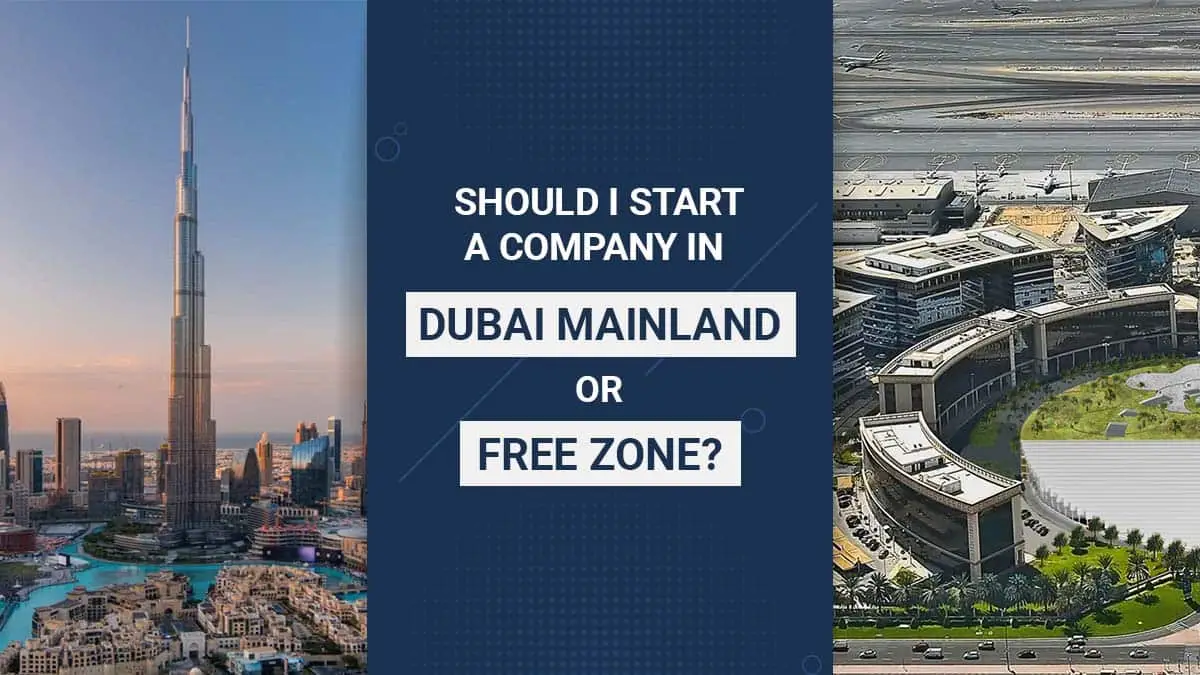
Dubai is one of the most popular places in the world to start a business. Entrepreneurs from all over choose Dubai because of its great location, business-friendly rules, modern infrastructure, and tax benefits. If you’re planning to start a business in Dubai, one of the first things you’ll need to decide is whether to open your company in the Mainland or in a Free Zone.
And this isn’t just a paperwork thing. The difference between mainland and freezone in Dubai affects everything from how much control you have over your company, to where you can do business, and how much it’ll cost to run. Pick the right one, and you’re set up for growth. Pick the wrong one, and you might hit a few walls.
In the UAE, businesses can be established in either a mainland or a free zone. Mainland companies operate under the regulation of the Department of Economic Development (DED) and can conduct business throughout the UAE and internationally. Free zones are designated areas with their own independent regulatory bodies, offering benefits like 100% foreign ownership and tax exemptions, but often with restrictions on operating within the mainland.
Not sure which one suits your business? Don’t worry, we’ll break it down in a simple, clear way so you can make the best choice for your goals.
What is a Mainland Company in Dubai?
A Mainland company in Dubai refers to a business that is registered and licensed by the Department of Economic Development (DED). This type of company is allowed to operate anywhere in the UAE, including on the mainland, in Free Zones, and even internationally, without restrictions.
Mainland businesses have the freedom to trade directly with the local market and take on government projects. This makes it an ideal choice for those who want full access to all business opportunities across the UAE.
Today, even 100% foreign ownership is allowed for most business activities under Mainland licenses (subject to the activity and DED approval), making it even more attractive to international investors.
Key Features of a Mainland Company:
- Can do business across the UAE and globally
- Licensed by the Department of Economic Development (DED)
- Eligible for unlimited visa quotas (based on office size)
- Can bid for UAE government projects and contracts
- Full foreign ownership is allowed for most activities
- Physical office space is mandatory
- Subject to UAE corporate tax laws and compliance requirements
What is a Free Zone Company in Dubai?
A Free Zone company in Dubai is a business entity registered under one of the many Free Zone Authorities (FZAs) in the UAE. These zones are special economic areas designed to attract foreign investment by offering 100% foreign ownership, tax benefits, and simplified company setup processes.
Free Zone companies are primarily set up to conduct business within the Free Zone itself or internationally. If they wish to operate in the UAE mainland (outside the zone), they must work through a local distributor or service agent. This makes Free Zones a popular choice for companies focused on import/export, e-commerce, consulting, media, and tech services.
There are over 40 Free Zones in the UAE, with some of the most well-known being:
- DMCC (Dubai Multi Commodities Centre)
- IFZA (International Free Zone Authority)
- JAFZA (Jebel Ali Free Zone)
- Dubai South
- RAKEZ (Ras Al Khaimah Economic Zone)
- Ajman Free Zone
Key Features of a Free Zone Company:
- 100% foreign ownership, no local partner required
- No customs duties on imports and re-exports within the zone
- Fast and cost-effective company setup
- Office space is optional in some zones (e.g., flexi-desks, virtual offices)
- Limited to doing business inside the Free Zone or internationally
- Must use a UAE distributor to trade in the mainland
- Access to world-class infrastructure and sector-specific zones
- Tax exemptions (e.g., import/export duties, corporate tax for qualifying zones)
What are the Key Differences Between Mainland and Free Zone in UAE?
Choosing between a Mainland and Free Zone company is a major step in setting up your business in Dubai. Here’s a side-by-side comparison to help you understand the difference between mainland and freezone companies and decide which one suits your goals best:
| Aspect | Mainland Company | Free Zone Company |
|---|---|---|
| Governing Authority | Licensed and regulated by the Department of Economic Development (DED) of the respective emirate. | Regulated by the Free Zone Authority (FZA) specific to that zone (e.g., DMCC, IFZA, JAFZA). |
| Business Scope | Can do business anywhere in the UAE, including directly with the local market and government. | Can do business within the Free Zone and internationally. Needs a UAE agent or distributor for mainland operations. |
| Ownership | 100% foreign ownership allowed for most business activities (as per latest UAE reforms). | 100% foreign ownership always permitted—one of the key benefits of Free Zones. |
| Office Space Requirement | Must lease a physical office space in the UAE; office size can affect visa quota. | Office space is often flexible, with options like flexi-desk, virtual office, or shared workspaces. |
| Visa Eligibility | No cap on visas; depends on office size and nature of the business. | Limited number of visas depending on the package or facility leased in the Free Zone. |
| Setup Cost | Generally higher, due to DED licensing fees, office rent, and broader compliance. | Usually more affordable, especially with packages offering shared spaces and bundled services. |
| Company Setup Time | Can take 7–14 business days depending on approvals and documentation. | Usually faster, setup can be completed in 2–7 days in some Free Zones. |
| Access to Local Market | Direct access to UAE market and can deal with clients across the country. | No direct access to local UAE market unless working with a licensed distributor or agent. |
| Corporate Tax | Subject to 9% UAE Corporate Tax (if revenue exceeds the threshold). | May qualify for 0% tax under Free Zone tax benefits if they meet specific criteria (Qualifying Free Zone Person). |
| Customs Duty | Customs duties apply when importing goods into UAE mainland. | Customs-exempt for trading within the Free Zone or for re-exporting. |
| Audit Requirement | Annual financial audit is mandatory for many license types. | Varies by Free Zone, some require audits, others don’t. |
| Regulatory Compliance | Requires DED approvals, renewals, and compliance with UAE labour laws. | Easier compliance due to streamlined processes within Free Zones. |
| Bank Account Opening | Easier to open a corporate bank account due to higher credibility in local trade. | Some banks may be more cautious; approval may take longer in certain zones. |
| Range of Activities | Wide range of activities including retail, manufacturing, construction, consultancy, and more. | Limited to activities approved by the specific Free Zone. Often focused on trade, services, tech, or media. |
| Government Contracts | Eligible to apply for government and semi-government tenders. | Not eligible to apply for tenders directly. |
| Reputation and Credibility | Often seen as more established and flexible for local partnerships. | May be seen as niche or limited for certain business activities. |
| Expansion Options | Easy to expand across UAE with branches, offices, and partnerships. | Expansion into mainland requires additional licensing or restructuring. |
Note: To know more about the difference between mainland and freezone, talk to our business setup experts at Shuraa.
Cost Comparison: Free Zone vs. Mainland
Cost is a key factor when choosing between a Free Zone and a Mainland business setup in Dubai. Free Zone setups are generally more affordable, especially for startups and small businesses. Many Free Zones offer bundled packages that include license fees, visa quotas, and even shared office space. These packages can start from as low as AED 6,000. Visa costs usually range between AED 3,000 and AED 6,000, but are limited by the size of your office or package.
Mainland setups involve higher upfront and ongoing costs. Business licenses typically range from AED 12,000 to AED 15,000+, and having a physical office is mandatory. Visa costs are similar to Free Zones but come with the advantage of unlimited visa eligibility (based on office size). Additional costs may include approvals, audit fees, and renewals.
Pros and Cons of Setting Up in the Mainland
Mainland company formation is ideal for businesses targeting the UAE market directly. However, here’s what you need to consider before setting up.
Pros:
- Full access to the UAE market: Mainland companies can trade anywhere in the UAE without restrictions, including working directly with customers, suppliers, or partners across all Emirates.
- Eligible for government projects: Only Mainland companies can bid for and execute UAE government and semi-government contracts.
- Unlimited visa quota: Unlike Free Zones, which cap visas based on office space or packages, Mainland businesses can apply for as many visas as needed, depending on the size of their physical office.
- Wide variety of business activities: Mainland licenses cover a broad range of activities, including trading, real estate, manufacturing, logistics, restaurants, and more.
- Scalability and branch expansion: Mainland companies can easily open branches across the UAE without being restricted by zone boundaries.
Cons:
- Higher setup and operational costs: Mainland licenses and office spaces typically come at a premium compared to Free Zone packages. Expect additional fees for registration, approvals, and compliance.
- Mandatory office requirement: You must lease a physical office in Dubai or another emirate, even if your operations are small or remote.
- More complex regulatory process: Setting up and renewing a Mainland license may involve more paperwork, inspections, and approvals, depending on your business activity.
- Annual audit requirements: Many Mainland companies must submit audited financial reports every year, which adds to the cost and administrative burden.
Pros and Cons of Setting Up in a Free Zone
Free Zones are perfect for startups and international businesses looking for cost-effective setup and full foreign ownership. But like any setup, they come with a few limitations.
Pros:
- 100% foreign ownership guaranteed: You have full control of your business without needing a local sponsor, regardless of your activity or nationality.
- Affordable setup with flexible packages: Many Free Zones offer startup-friendly packages that include the trade license, shared office space, and visa quota at a low fixed price.
- Faster and easier company formation: Free Zones have streamlined processes, often allowing you to register a business within a few days with minimal paperwork.
- Attractive tax benefits: Qualifying Free Zone companies can enjoy 0% corporate tax, no import/export duties within the zone, and 100% repatriation of capital and profits.
- Optional office space: Many Free Zones allow virtual offices or flexi-desk options, helping reduce rental costs if you don’t need a full-time physical space.
Cons:
- No direct access to UAE mainland market: You cannot directly sell or provide services to clients in the mainland unless you appoint a licensed local distributor or service agent.
- Visa limitations: The number of employee visas you can apply for is often limited by the office space or the package you select.
- Restricted business activities: Each Free Zone focuses on specific sectors (e.g., tech, media, logistics), so your business activity must match the zone’s allowed categories.
- Cannot work with the UAE government: Free Zone companies are not eligible to apply for public sector or government tenders unless they open a mainland branch.
How Shuraa Can Help You Decide
Both Mainland and Free Zone setups are great options for starting a business in Dubai. Free Zones are ideal if you want full ownership, lower setup costs, and plan to deal with international clients. Mainland companies are better if you want to do business across the UAE, work with local clients, or grow a large team. The right choice really depends on what your business needs.
At Shuraa Business Setup, we’ve been helping entrepreneurs for over 26 years and know both Mainland and Free Zone setups inside out. Our team will listen to your goals and suggest the best option for your business, plus handle all the paperwork and approvals for you.
Need help deciding? Just get in touch with us, and we’ll guide you every step of the way to set up your business smoothly and confidently in Dubai.
Frequently Asked Questions (FAQs)
1. What is the difference between Free Zone and Mainland companies in Dubai?
Free Zone companies are limited to operating within their zone or internationally, while Mainland companies can trade across the UAE without restrictions. The Mainland also allows access to government contracts and a wider range of activities.
2. What is the process of business setup in the Dubai Mainland?
To set up business in Dubai mainland, follow these steps:
- Choose your business activity
- Reserve a trade name through DED
- Get initial approval from DED
- Lease a physical office space
- Submit required documents (passport copy, application form, tenancy contract, etc.)
- Pay fees and receive your mainland license
3. How to set up a business in a Dubai Free Zone?
To establish a business in Dubai Free Zone, follow these steps:
- Select a Free Zone that suits your business activity
- Choose the type of license (commercial, professional, industrial, etc.)
- Submit application and documents (passport copy, business plan, etc.)
- Choose workspace (flexi-desk, shared office, or full office)
- Pay fees and receive your Free Zone license
4. Can a Free Zone company do business in the UAE mainland?
Not directly. Free Zone companies must appoint a local distributor or agent to sell products or services in the mainland.
5. Can I get UAE residence visas with both options?
Yes. Both Mainland and Free Zone companies allow you to apply for investor and employee visas. However, visa limits in Free Zones depend on office size or package.
6. Which is cheaper to set up – Mainland or Free Zone?
Free Zone setups are generally more cost-effective, with flexible packages and lower startup costs. Mainland setups may be more expensive due to office requirements and broader licensing.
7. How can I decide which setup is right for my business?
It depends on your goals, budget, and target market. You can speak to experts at Shuraa Business Setup for free guidance tailored to your business activity.
Disclaimer: The information in this post is for general guidance only and may change due to updates in government policies or regulations.