The UAE has earned a reputation as one of the world’s most trusted business destinations, attracting entrepreneurs, investors, and companies with its business-friendly environment, tax benefits, and transparent regulations.
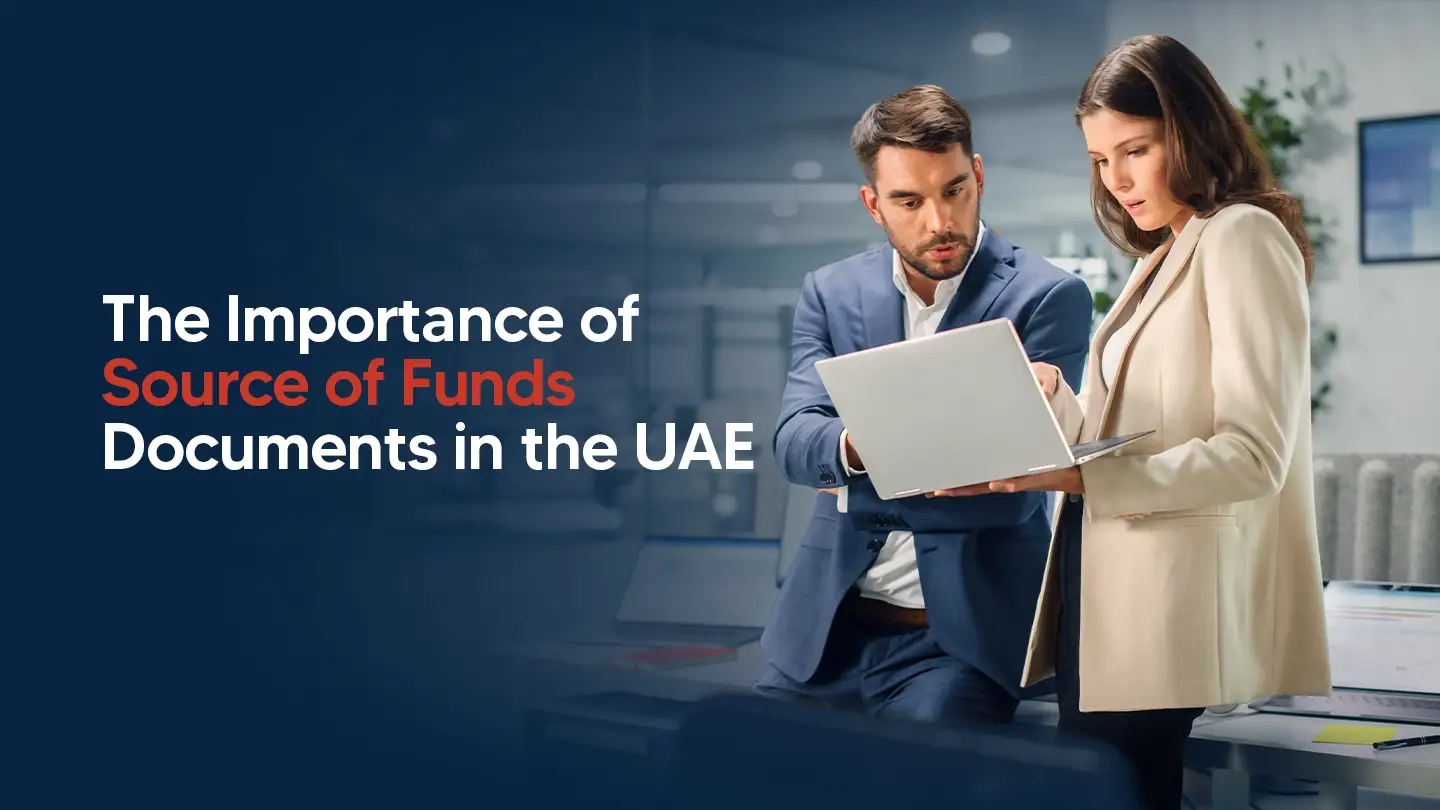
As the business landscape grows, so does the focus on financial transparency. Whether you’re opening a corporate bank account, applying for an investor visa, buying property, or setting up a company, you may be asked to submit a source of funds to document.
While it may seem like routine paperwork, it’s a key compliance requirement. Banks and authorities use it to verify where your money comes from, helping prevent fraud, money laundering, and other illegal financial activities.
If you’ve been asked to provide a declaration of source of funds or an AML form, this guide explains why it matters and what you need to know.
What is the Source of Funds?
A source of funds document is proof that explains where the money used in a transaction comes from. It helps banks and authorities verify that the funds were obtained legally and comply with UAE regulations.
For example, if you’re investing AED 1 million in a business, you may need to show whether the money came from your salary, business profits, property sales, investments, savings, inheritance, documented gifts, or a loan from a recognised financial institution.
In many cases, you’ll also need to submit a source of funds declaration form, along with supporting evidence. Some institutions may additionally request an origin of funds certificate or other documents to verify the information provided.
Why Does a Source of Funds Document Matter?
Financial crimes have become increasingly sophisticated worldwide. To maintain its reputation as a global financial hub, the UAE has introduced strict regulations that require businesses and financial institutions to verify the legitimacy of funds.
A properly prepared source of funds document helps:
- Build trust with banks and regulators
- Speed up account opening and business setup processes
- Reduce compliance risks
- Demonstrate financial transparency
- Prevent delays during due diligence
Without proper documentation, transactions may be delayed; additional information may be requested, or applications may even be rejected.
What are the Key Characteristics of Source Funds in the UAE?
A valid source of funds should be clear, traceable, and supported by reliable evidence. UAE authorities expect businesses and individuals to maintain accurate financial records that can explain how their money was generated.
Some of the key characteristics include:
- Legitimacy
The money must come from lawful activities. Whether it is employment income, business profits, investments, or property sales, the source should comply with UAE regulations.
- Traceability
Every transaction should leave a financial trail. Bank statements, contracts, invoices, and tax records make it easier to verify where the funds originated.
- Proper Documentation
Authorities usually require official supporting documents rather than verbal explanations. The stronger your evidence, the smoother the verification process.
- Consistency
The documents you submit should match your financial records. Any discrepancies may trigger additional compliance checks.
- Compliance with AML Regulations
Businesses operating in the UAE are expected to comply with Anti-Money Laundering (AML) laws. As part of customer due diligence, banks often request an AML form together with relevant anti money laundering documents to confirm the legitimacy of financial transactions.
Types of Sources of Funds in the UAE
Funds can originate from various legal sources. Below are the most common categories accepted by banks and regulatory authorities in the UAE.
- Employment Income
For salaried professionals, employment income is one of the simplest sources to verify.
Supporting documents may include:
- Payslips
- Bank statements showing salary credits
This is commonly used by entrepreneurs investing their personal savings in a new company.
- Business Proceeds
Business owners often use profits from existing companies to finance new ventures.
Typical supporting documents include:
- Audited financial statements
- Company bank statements
- Tax records (where applicable)
- Business invoices
- Profit and loss statements
- Investment Returns
Income generated through investments is another recognised source of funds.
Examples include:
- Dividends
- Mutual funds
- Bonds
- Stock market investments
- Investment portfolios
Supporting documents may include investment statements, dividend reports, or broker confirmations.
- Real Estate or Asset Sales
If funds have been generated through the sale of a property or another valuable asset, authorities generally require documents that prove the transaction.
These may include:
- Sale agreements
- Property transfer documents
- Payment receipts
- Bank statements showing receipt of funds
Common Sources of Funds Accepted in the UAE
The common sources of funds accepted in the UAE are as follows:
- Salary / Wages
Regular monthly income earned through employment is widely accepted, provided it can be supported with employment records and bank statements.
- Business Income / Profits
Business owners may use retained earnings, company profits, or dividends as long as they can demonstrate the legitimacy of the income.
- Investments and Dividends
Returns generated through legal investments are considered acceptable when supported by financial statements and investment records.
- Loans and Gifts (Legally Documented)
Not all funds come from income. In some cases, businesses are financed through loans or gifts. However, these must be properly documented.
Supporting documents may include:
- Loan agreements
- Bank transfer records
- Gift deeds
- Affidavits
- Financial statements of the lender or donor
Banks may request additional information depending on the transaction value.
What Legal Documentation Is Required?
The exact documentation varies depending on your bank, licensing authority, or the nature of your transaction. However, most organisations typically request a combination of the following:
- Valid passport and Emirates ID
- Recent bank statements
- Salary certificates or employment contracts
- Company financial statements
- Investment portfolio statements
- Property sale agreements
- Loan agreements
- Gift deeds
- Tax records (if applicable)
- Origin of funds certificate (where requested)
- Supporting invoices or contracts
- Completed AML form
- Other anti money laundering documents required during customer due diligence
Keeping these documents organised can significantly reduce processing times when dealing with banks or regulatory authorities.
What are the Legal and Regulatory Framework in the UAE?
The UAE has implemented a strong legal framework to combat money laundering, terrorist financing, and other financial crimes. Businesses are expected to maintain transparency and cooperate with regulatory authorities whenever financial verification is required.
Key regulations include:
- Federal Decree-Law No. 20, 2018 on Anti-Money Laundering and Combating the Financing of Terrorism and Illegal Organisations.
- Cabinet Resolution No. 10, 2019, which outlines the implementation of regulations for AML compliance.
- Guidance issued by the UAE Central Bank and other competent authorities for financial institutions and designated non-financial businesses and professions (DNFBPs).
Under these regulations, banks, financial institutions, real estate companies, auditors, company service providers, and several other regulated entities must carry out Customer Due Diligence (CDD). As part of this process, they may ask clients to provide a source of funds document, supporting financial records, and other compliance-related information.
Businesses should also ensure that their internal compliance procedures align with AML requirements to avoid unnecessary scrutiny or delays.
What are the Penalties for Non-Compliance in the UAE?
Failing to provide accurate financial information or attempting to conceal the origin of funds can have serious consequences in the UAE.
Depending on the nature and severity of the violation, businesses or individuals may face:
- Delays in opening corporate or personal bank accounts
- Suspension or rejection of financial transactions
- Increased regulatory scrutiny
- Administrative fines
- Restrictions on business operations
- Criminal investigations in cases involving suspected financial crime
- Asset freezing or confiscation where applicable under UAE law
It’s important to understand that penalties are not only imposed for illegal activity. Incomplete, inconsistent, or misleading information during due diligence can also lead to complications, additional verification requests, and reputational damage.
Providing complete and accurate documentation from the outset helps businesses avoid unnecessary disruptions and demonstrates a commitment to regulatory compliance.
How to Prove Your Source of Funds?
Proving the legitimacy of your funds doesn’t have to be complicated. The key is maintaining accurate records and ensuring every major financial transaction can be supported with credible evidence.
Here are a few practical steps:
- Keep Financial Records Up to Date
Maintain organised bank statements, invoices, contracts, tax documents, and financial reports. These records provide a clear trail of how your funds were earned.
- Maintain Proper Business Accounts
Avoid mixing personal and business finances. Separate accounts make it easier for banks and authorities to verify transactions.
- Retain Supporting Agreements
If your funds come from a property sale, business acquisition, investment, loan, or gift, keep all legal agreements and transfer records safely stored.
- Ensure Information Matches
The information in your supporting documents should be consistent. Differences between declarations, bank records, and contracts may trigger additional compliance checks.
- Be Prepared for Additional Questions
Banks and regulators may request further clarification for large or unusual transactions. Responding promptly with complete documentation can help speed up the review process.
What is the Risk-Aware Practices for Source Funds?
Businesses can reduce compliance risks by adopting good financial governance and maintaining transparency in every transaction.
Some best practices include:
- Conduct regular internal financial reviews.
- Maintain proper accounting records.
- Verify the identity of customers and business partners.
- Document all significant transactions.
- Implement internal AML compliance procedures.
- Train employees on financial compliance requirements.
- Keep copies of supporting documents for future audits.
- Review high-value or unusual transactions before processing them.
These practices not only help with regulatory compliance but also strengthen the credibility of your business when dealing with banks, investors, and government authorities.
What are the Common Misconceptions about the Source of Funds in the UAE?
There are several misconceptions surrounding the source of funds requirements. Let’s clear up a few of the most common ones.
“Only large corporations need a source of funds document.”
Not true. Small businesses, startups, freelancers, and individual investors may also be asked to provide proof of their funds, depending on the transaction.
“My bank already knows me, so I won’t need to provide documents.”
Even long-standing customers may be required to submit updated documentation as part of ongoing compliance and due diligence obligations.
“A bank statement alone is always enough.”
While bank statements are important, they may not fully explain how the funds were earned. Additional supporting documents are often required.
“Source of funds means source of wealth.”
These terms are related but not identical. Source of funds refers to the origin of the money used for a specific transaction, whereas source of wealth explains how an individual accumulated their overall wealth over time.
“AML requirements only apply to banks.”
Many regulated businesses, including real estate firms, auditors, company formation consultants, law firms, and other designated sectors, must also comply with AML regulations and conduct customer due diligence.
Build Trust with Proper Source of Funds Documentation
A source of funds document is far more than a compliance requirement; it’s a vital part of building trust in today’s business environment. Whether you’re launching a startup, expanding your company, opening a corporate bank account, or making a significant investment, being able to clearly demonstrate where your funds come from can save time, prevent delays, and strengthen your credibility.
By maintaining accurate financial records, completing the necessary declarations, and staying compliant with the UAE’s anti-money laundering regulations, businesses can handle regulatory processes with greater confidence and efficiency.
If you’re setting up a business in the UAE or need assistance with compliance requirements, Shuraa Business Setup is here to help. Our experienced consultants can guide you through documentation, company formation, banking assistance, and regulatory compliance, making the process simple and hassle-free.
Get in touch with Shuraa Business Setup today. Call us on +971 4 408 1900, or WhatsApp us on +971 50 777 5554, or email us at info@shuraa.com
Frequently Asked Questions (FAQs)
1. Can I open a UAE bank account without proof of source of funds?
In most cases, UAE banks may request proof of source of funds as part of their KYC and compliance checks. The exact requirement depends on the bank, account type, and customer profile.
2. How much money can I transfer to the UAE without proof of source of funds?
There is no single fixed amount that applies to every bank. Proof of source of funds may be requested depending on the transaction value, frequency, purpose, and overall risk assessment.
3. Can a UAE bank freeze my account if I don’t provide source of funds?
A bank may restrict certain transactions, request additional documents, or review the account if the source of funds cannot be verified satisfactorily.
4. Can cryptocurrency profits be accepted as source of funds in the UAE?
Yes, cryptocurrency profits may be accepted if they are legitimate, traceable, and supported by proper records such as exchange statements, transaction history, and proof of investment.
5. How long does source of funds verification take in the UAE?
There is no fixed verification timeline. The process depends on the bank, complexity of the transaction, and whether all required supporting documents are complete and consistent.
6. Do I need proof of source of funds to start a business in the UAE?
You may be asked to provide proof of source of funds during company formation, banking, or compliance checks, especially when making significant investments.
7. Can I use personal savings to fund a new UAE company?
Yes. Personal savings can generally be used to fund a business, provided you can show how the money was accumulated through supporting records such as bank statements or salary documents.
8. Is source of funds required to open a corporate bank account in the UAE?
Banks commonly request information about where the company’s initial capital or business funds come from as part of their KYC and due-diligence process.
9. Can business profits from another company be used to set up a UAE business?
Yes. Profits from an existing business can be used, provided they are legitimate and supported by documents such as company bank statements, financial statements, invoices, or tax records.
10. Can a lack of source-of-funds documents delay UAE company setup?
Yes. Missing or inconsistent financial documents can lead to additional compliance checks and may delay banking or other stages connected to the business setup process