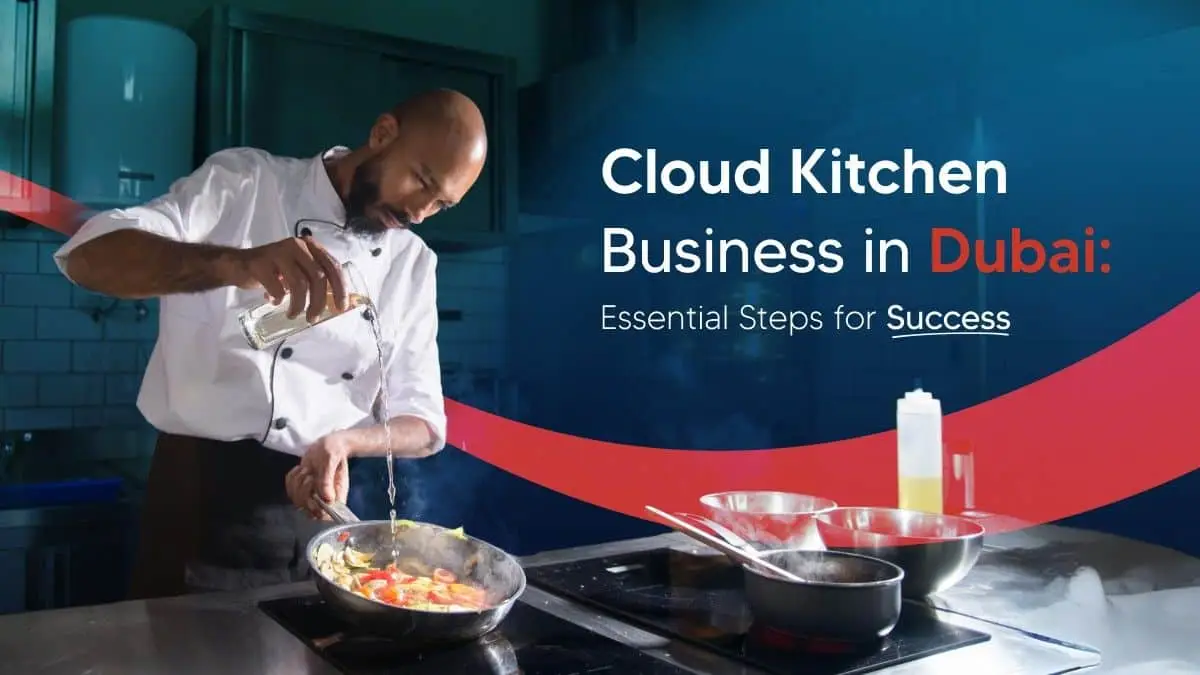
The food industry in Dubai is changing rapidly as more people order food online. Leading this change is the cloud kitchen business in Dubai, known for its efficiency and strong profitability.
But what is a cloud kitchen? Simply put, it is a kitchen set up just for making food to be delivered. Since there is no place for customers to eat or visit, these kitchens cost much less to run and are less risky than regular restaurants. This lets chefs focus solely on making great food for orders placed through apps like Deliveroo, Talabat, and Careem.
The trend is clear. From new businesses to well-known restaurants, everyone is using the cloud kitchen model in the UAE to capitalize on the growing delivery market. If you want to start a cloud kitchen, the first thing you need to know is the cloud kitchen license and its cost.
This guide will walk you through everything you need to know from the cloud kitchen license cost in Dubai to the practical steps on how to open a cloud kitchen in Dubai and build a successful cloud kitchen business in the UAE.
KEY TAKEAWAYS
- Low-Cost, High-Profit Model: Cloud kitchens reduce costs by removing the need for prime-location storefronts, dining areas, and large front-of-house teams, providing a capital-efficient alternative to traditional restaurants.
- Leveraging Dubai’s Delivery Growth: This model aligns with Dubai’s digitally native consumers who use platforms such as Talabat and Deliveroo, providing immediate access to a large market.
- Licensing is Essential: Obtaining the required Dubai cloud kitchen licenses, including Trade, Food, and Civil Defense approvals, is the first step for legal and compliant operations.
- Manageable Startup Costs: Initial investment typically ranges from AED 75,000 to ~~AED 175,000+, depending on kitchen size, location, and equipment.
- Designed for Rapid Growth: One licensed kitchen can support multiple virtual brands, enabling flexible expansion, low-risk menu testing, and scalable market reach.
In summary, a cloud kitchen in Dubai is a streamlined, scalable food business designed for the delivery era. It offers lower financial risk, clear regulatory processes, and direct access to a growing digital marketplace.
What is a Cloud Kitchen? The Future of Food Delivery Explained
A cloud kitchen—also known as a ghost kitchen, dark kitchen, or virtual kitchen—is a professional food production facility that operates exclusively for delivery and takeaway orders, with no physical dine-in space for customers.
A cloud kitchen is a streamlined, delivery-focused facility where the business centers on preparing restaurant-quality meals ordered, paid for, and managed through digital platforms.
Core Characteristics of a Cloud Kitchen in Dubai:
- Delivery-Only Model: No storefront, no dining area, no waitstaff. The sole focus is on efficient food production for delivery.
- Location Flexibility: These kitchens are typically located in lower-rent industrial or commercial areas, since street visibility is not required. Proximity to high-demand residential and business districts is prioritized for faster delivery.
- Powered by Technology: Operations rely on integrated technology, including online ordering systems, kitchen display screens, and delivery management dashboards, to ensure seamless order flow from app to doorstep.
- Multi-Brand Potential: A single licensed cloud kitchen can operate multiple virtual restaurant brands from one facility. This enables entrepreneurs to test various cuisines and menus without the expense of multiple locations.
Cloud Kitchen vs. Traditional Restaurant: A Direct Comparison
| Primary Focus | Food production for delivery/takeaway | Dine-in experience & food service |
| Location Cost | Lower (industrial/commercial areas) | High (prime retail/high-street) |
| Customer Interaction | Digital-only (via apps/platforms) | Physical & digital |
| Overhead | Significantly lower (no front-of-house) | High (rent, decor, hosting staff) |
| Scalability | High (easy to replicate or add brands) | Lower (requires new full premises) |
| Key Investment | Kitchen equipment, packaging, tech stack | Ambiance, seating, full-service staff |
The Dubai Example: Kitopi
Kitopi, a Dubai-based global leader, exemplifies the success of this model in the region. Kitopi operates a network of smart kitchens, partnering with local and international brands to manage over 100 virtual restaurant brands from centralized facilities. This highlights the scalability and efficiency of the cloud kitchen model in the UAE.
In summary, a cloud kitchen serves as the operational core of modern food delivery. By eliminating traditional restaurant costs, it focuses on producing high-quality food for delivery, meeting consumers online. For entrepreneurs, it offers a direct and efficient path to building a food brand in the digital age.
6 Key Advantages of Starting a Cloud Kitchen in Dubai
The cloud kitchen model goes beyond being a trend in Dubai. It represents a smart business move that appeals to the city’s tech-savvy customers and responds quickly to its fast-changing market. Business owners and growing brands enjoy benefits that regular restaurants cannot match. These are the main reasons to start a cloud kitchen business in Dubai:
1. Significant Cost Savings & Lower Financial Risk
This is the biggest advantage. Without expensive locations, décor, or a large team, your costs are much lower. You can focus your spending on ingredients, kitchen tools, and branding. Starting and running are both cheaper, which lowers your financial risk and increases profit chances. Closing or making changes is less expensive than with a regular restaurant.
2. Rapid & Scalable Expansion
A cloud kitchen in Dubai lets you grow quickly. Without a dining area, you can test new ideas, menus, or run several online brands from one kitchen. Existing restaurants can expand into new areas affordably. Once popular, it’s easy to open more cloud kitchens across the UAE and reach more customers fast.
3. Access to a Vast, Digital-First Audience
Listing your kitchen on Talabat, Deliveroo, or Careem connects you to Dubai’s busy online food scene. Instead of serving one street, you reach the whole city. These apps help attract attention and boost sales quickly through ads and offers.
4. Streamlined, Focused Operations
Running a cloud kitchen is simpler. Focus on great food, packaging, and fast delivery. Without dining service, you can improve your kitchen’s performance while maintaining high quality. Tech systems handle orders and questions smoothly.
5. Data-Driven Decision Making for Maximum ROI
Cloud kitchens use data to improve. Every order provides useful info on peak times, popular dishes, customer locations, and spending. This lets you adjust your menu, prices, promotions, and supplies for better results. Fast adaptation is a key advantage in Dubai’s busy market.
6. Flexibility and Brand Agility
The model gives you flexibility to try unique foods, offer limited-time items, or serve special diets with little risk. You can adapt quickly to feedback. The cloud kitchen license lets you choose hours that match demand, effectively using staff and resources.
Legal and Licensing Requirements for a Cloud Kitchen in Dubai
Obtaining the necessary approvals is essential for operating a compliant and successful cloud kitchen in Dubai. The process is straightforward but requires careful attention. Below are the main licenses and permits required:
| Requirement | Issuing Authority | Key Purpose & Notes |
|---|---|---|
| 1. Trade License | DET (Mainland) or Free Zone Authority | Legal permission to operate. Activity must be “Restaurant/Food Service.” |
| 2. Food License | Dubai Municipality, Food Safety Department | Mandatory permit to handle, prepare, and sell food. |
| 3. Food Safety Certification | Dubai Municipality | Proof of compliance with HACCP & other safety standards. Staff training is required. |
| 4. Kitchen Tenancy Contract (Ejari) | Dubai REST | Legal proof of a commercial kitchen space meeting all municipality health & safety codes. |
| 5. Company Formation | DET or Free Zone | Choosing legal structure (e.g., LLC) and registering your trade name. |
| 6. Civil Defense Approval | Dubai Civil Defense | Fire, safety, and ventilation system clearance for the premises. |
How to Start a Cloud Kitchen in Dubai: A 10-Step Guide
Launching a cloud kitchen in Dubai requires both entrepreneurial vision and regulatory compliance. Use this step-by-step guide to turn your concept into a successful delivery-only restaurant.
Step 1: Develop Your Business Concept & Strategy
Begin with a compelling and viable business concept.
- Define Your Niche: Conduct market research to identify market gaps. Determine which cuisines are underserved and which dietary trends you can address. Ensure your menu is distinctive and optimized for delivery.
- Analyze Competitors: Review successful cloud kitchens and traditional restaurants on delivery platforms. Assess their pricing, packaging, and customer reviews to identify opportunities for differentiation.
- Create a Business Plan: Detail your menu, target audience, pricing strategy, marketing approach, and financial projections. This plan is essential for securing funding and guiding your launch.
Step 2: Select & Approve Your Trade Name
Your trade name serves as your brand’s legal identity.
- Follow DET Naming Conventions: The name must be unique, culturally appropriate, and cannot include offensive language, religious references, or politically charged terms.
- Check Availability: Submit your preferred name to the Department of Economic and Tourism (DET) or your selected Free Zone authority for preliminary approval. It is advisable to prepare two or three backup names.
Step 3: Choose Your Legal Business Structure
This choice affects liability, ownership, and future expansion.
- Mainland (DET): Ideal for targeting the entire UAE market directly. Common structures include Limited Liability Company (LLC) or Sole Proprietorship.
- Free Zone: Offers 100% foreign ownership and tax benefits, but may restrict direct delivery to the mainland. Perfect for a central kitchen supplying other entities.
- Professional License: Suitable for individual chefs or small-scale operations.
Recommendation: Consult a business setup expert to determine the most suitable structure for your objectives.
Step 4: Secure Your Official Licenses & Approvals
This is the most important regulatory phase. You will need the following:
- Initial Approval: From the DET or Free Zone, allowing you to proceed with lease signing and other registrations.
- Trade License: The core business license with the activity listed as “Restaurant/Food Service.”
- Dubai Municipality Approvals:
- Food License: Mandatory permit to handle and sell food.
- Food Safety Certificate: Proof of HACCP compliance and trained staff.
- Tenancy Contract (Ejari): A legally registered contract for a commercial kitchen space that meets municipality requirements for ventilation, drainage, and sanitation.
- Civil Defense Approval: Fire safety and equipment clearance for your premises.
Step 5: Secure the Right Kitchen Location
Location is crucial for efficient logistics rather than customer foot traffic.
- Prioritize Delivery Zones: Select an industrial or commercial area, such as Al Quoz or Ras Al Khor, that is central to your target residential and business districts, including Dubai Marina, Downtown, and DIFC, to ensure quick delivery times.
- Infrastructure is Key: The space must offer reliable utilities, proper waste disposal, loading access, and comply with all municipality health codes.
Step 6: Equip Your Kitchen and Integrate Technology
- Procure Commercial-Grade Equipment: Invest in durable, high-capacity cooking, refrigeration, and packaging equipment.
- Implement Your Tech Stack: This forms the backbone of your operations. Essential tools include:
- Kitchen Display System (KDS): To manage order flow.
- Point-of-Sale (POS) System: Integrated with delivery platforms.
- Delivery Management Software: For tracking and optimizing dispatch if you manage your own delivery staff.
Step 7: Partner with Delivery Platforms and Market Your Brand
- Onboard with Aggregators: Register your kitchen on platforms such as Talabat, Deliveroo, Careem, and Noon Food. These serve as your primary sales channels.
- Develop a Direct Channel: Consider a simple website with online ordering via tools like WhatsApp or Instagram to reduce commission fees.
- Launch Your Marketing: Run a pre-launch campaign on social media, collaborate with food influencers, and use promotional offers on delivery platforms to generate initial orders.
Step 8: Establish Your Business Operations
- Open a Corporate Bank Account: Keep business finances separate to maintain clarity and professionalism.
- Secure Business Insurance: Obtain property insurance for your kitchen, public liability coverage for operations, and workmen’s compensation for employees.
- Hire and Train Your Team: Recruit skilled kitchen staff and ensure they are certified in Dubai’s food safety standards.
Step 9: Execute a Soft Launch
Conduct a controlled soft launch before opening to the public.
- Test your kitchen’s capacity, delivery logistics, and packaging using a limited menu or invite-only orders.
- Gather feedback and resolve any operational issues.
Step 10: Officially Launch, Monitor & Scale
- Go Live: Activate all marketing channels and ensure your listings are live on all platforms.
- Analyze Data Consistently: Monitor your best-selling items, peak order times, and customer feedback. Use these insights to refine your menu and operations weekly.
- Plan for Scale: Once profitable, consider launching additional virtual brands from the same kitchen or expanding to new locations.
Final Checklist Before Launch:
- All licenses framed and displayed
- Staff uniforms and hygiene protocols in place
- Packaging stocked and branded
- Menu lives on all chosen platforms
- Delivery radius and zones set
- Soft launch feedback implemented
By following these steps, you will establish a compliant, efficient, and customer-ready cloud kitchen in Dubai, well-positioned for sustainable growth in the competitive food delivery market.
Documents Required to Start a Cloud Kitchen in Dubai
Gathering all required documents is essential for obtaining a license for your cloud kitchen. Proper preparation will help expedite your application with the Department of Economic and Tourism (DET), Dubai Municipality, and other authorities.
The following checklist is organized by document category.
Core Business Setup Documents
These documents are needed for company formation, initial approval, and trade license issuance.
- Passport Copies: Provide clear copies of each proposed shareholder’s or owner’s passport.
- Visa Copies: Submit current UAE residency visas, if applicable, for all shareholders or owners.
- No-Objection Certificate (NOC): If a shareholder is sponsored by an employer or spouse, provide a legally attested NOC to conduct business.
- Local Service Agent Agreement: For sole proprietorships or civil companies owned by expatriates on the UAE mainland, submit a signed agreement with a UAE national as your Local Service Agent.
- Memorandum of Association (MOA): For LLCs, provide the legally binding agreement that details shareholding percentages and company bylaws.
- Approved Trade Name Certificate: Submit the official certificate from the DET confirming your business name.
Premises & Tenancy Documents
These documents confirm you have secured a legally compliant kitchen space.
- Tenancy Contract (Ejari): Provide the tenancy contract for your commercial kitchen, fully registered with the Dubai Land Department (Ejari system). This is mandatory.
- Title Deed Copy: Submit a copy from the landlord that proves ownership of the premises.
- Location Map & Layout Plan: Provide a detailed floor plan of the kitchen, clearly indicating areas for storage, preparation, cooking, cleaning, and waste disposal, as required by Dubai Municipality.
Health, Safety & Operational Documents
These are submitted to Dubai Municipality and Civil Defense for final operational clearance.
- Food Safety Management Plan: Submit a detailed HACCP (Hazard Analysis and Critical Control Points) plan outlining procedures for safe food handling, storage, and preparation.
- Staff Certificates: Provide copies of Food Handler Training Certificates for all kitchen staff, obtained from a Dubai Municipality-approved training center (e.g., DTCM).
- Health Certificates: Submit medical fitness certificates for all food-handling employees from a Dubai-approved health center.
- Equipment List & Specifications: Provide a detailed list of all commercial kitchen equipment, including make, model, and capacity, for municipality review.
- Waste Disposal Contract: Submit proof of a contract with a Dubai Municipality-approved waste collection and disposal company.
- Pest Control Contract: Provide proof of an ongoing contract with a licensed pest control service provider.
Additional Documents (As Required)
- Civil Defense Approval Documents: After your kitchen fit-out is complete, obtain and submit the final Civil Defense approval certificate.
- Branding & Marketing Materials: Some authorities may request samples of your packaging and logo to verify compliance with labeling regulations.
Pro Tip: Prepare both clear scanned copies and original documents for all applications. Requirements may vary depending on your legal structure and the authorities involved. Consulting a business setup expert can help ensure your documents are complete and properly attested, reducing the risk of delays.
Cost of Starting a Cloud Kitchen in Dubai: A Detailed Breakdown
Starting a cloud kitchen in Dubai typically costs between AED 75,000 and AED 175,000 for a fully licensed and operational setup. Actual investment will vary based on kitchen size, location, scale of operations, and equipment.
Here is a detailed breakdown of all expected costs.
1. Business Licensing & Government Fees (Approx. AED 15,000 – AED 25,000)
This covers all mandatory approvals to operate legally.
- Initial Approval & Trade Name Reservation: AED 1,000 – 2,000
- DET Trade License (Mainland): AED 10,000 – 15,000 (annual renewal)
- Dubai Municipality Fees: AED 3,000 – 6,000 (includes Food License, initial inspections, and food safety certification)
- Civil Defense Approval: AED 1,000 – 2,000
- Miscellaneous Attestations & Documentation: AED 1,000 – 2,000
2. Kitchen Location & Setup (Approx. AED 30,000 – AED 70,000+)
This will be your highest upfront cost.
- Security Deposit (Rent): Typically 5% of the annual rent, paid upfront.
- Annual Rent for Commercial Kitchen Space: Varies drastically.
- Industrial Area (Al Quoz, Ras Al Khor): AED 40,000 – AED 70,000 per year
- Warehouse/Commercial Unit: AED 50,000 – AED 100,000+ per year
- Ejari Registration: AED 1,500 – 2,500
- Kitchen Interior Fit-Out & Modifications: AED 15,000 – AED 40,000+ (Includes plumbing, electrical work, exhaust hood installation, flooring, wall cladding, and compliance modifications as per municipality and civil defense standards).
3. Kitchen Equipment & Supplies (Approx. AED 20,000 – AED 50,000)
- Basic Kitchen Equipment: AED 15,000 – AED 35,000 (This includes strong stoves, ovens, fryers, fridges, freezers, prep tables, and sinks).
- Packaging Inventory: AED 3,000 – AED 8,000 (Initial stock of branded containers, bags, napkins, cutlery).
- Initial Dry & Cold Storage Stock: AED 2,000 – AED 7,000 (First bulk purchase of ingredients).
4. Technology & Software (Approx. AED 5,000 – AED 15,000)
- Point-of-Sale (POS) & Kitchen Display System (KDS): AED 3,000 – AED 10,000 (Hardware and software setup).
- Business Management Software: AED 2,000 – AED 5,000 (Tools to help with tracking stock, handling money, or managing deliveries).
5. Operational & Pre-Launch Costs (Approx. AED 5,000 – AED 15,000)
- Staff Salaries & Visas (1-2 months advance): AED 8,000 – AED 20,000 (For chef(s) and kitchen helpers).
- Staff Food Safety Training & Medical Tests: AED 500 – AED 1,000 per person.
- Business Insurance: AED 2,000 – AED 5,000 (Annual premium).
- Marketing & Brand Launch: AED 3,000 – AED 10,000 (Photography, social media campaigns, influencer collaborations, initial promotional offers on delivery apps).
- Utility Deposits (DEWA, Gas): AED 2,000 – AED 4,000.
Important Note: The figures above are for reference only. The final license cost and total startup expense depend on your specific business capacity, exact location, equipment choices, and whether you use a business setup consultant. Contact our experts for a personalized, all-inclusive quote tailored to your cloud kitchen concept.
Avoiding Common Pitfalls & How to Overcome Them
Starting a cloud kitchen presents unique challenges. Understanding common mistakes can save time, money, and stress.
Mistake 1: Underestimating Licensing & Compliance
- The Pitfall: Assuming the process is simple or cutting corners on health, safety, or civil defense approvals can result in heavy fines, immediate closure, or exclusion from major delivery platforms.
- How to Overcome It: Make licensing your top priority. Work with a trusted business setup expert who knows the food and beverage industry. Set aside all fees in advance and do not start your business until you have official approvals from the Dubai Municipality and Civil Defense.
Mistake 2: Poor Location & Logistics Planning
- The Pitfall: Selecting a kitchen based only on low rent, without considering proximity to target delivery zones. Locations far from residential or business areas cause slow deliveries, cold food, and negative reviews.
- How to Overcome It: Use delivery app maps to see where most orders come from. Focus on fast delivery instead of just saving on rent. Pick a spot in an area like Al Quoz that is only 10 to 15 minutes away from your main customers, such as those in Dubai Marina or Downtown.
Mistake 3: Neglecting the “Delivery Experience”
- The Pitfall: Focusing solely on in-kitchen taste and neglecting how food travels. Poor packaging results in soggy, spilled, or cold meals, which is the leading cause of negative ratings and lost repeat business.
- How to Overcome It: Use strong, practical packaging that fits your menu, such as containers with holes for crispy food, insulated boxes for hot meals, and leakproof packs for sauces. Try test deliveries in your area before opening to make sure the food stays good.
Mistake 4: Trying to Do Everything In-House
- The Pitfall: Handling delivery, marketing, and customer service yourself as a new business takes attention away from cooking, costs more, and is less effective than using experts.
- How to Overcome It: Use what is already available. Use services like Talabat and Deliveroo for delivery and marketing. Hire an agency to handle online marketing and get help from a cloud kitchen expert for setup. Let your own team focus on making food.
Mistake 5: Launching with an Overly Complex Menu
- The Pitfall: Offering an extensive menu to attract all customers leads to high food waste, inconsistent quality, slow preparation, and operational inefficiency.
- How to Overcome It: Start with a simple menu of 8 to 12 popular, profitable dishes that hold up well during delivery. Focus on making food the same way every time and being quick. Use early customer feedback to improve and slowly add more dishes as people request them.
Tips for Successfully Launching Your Cloud Kitchen in Dubai
Besides avoiding mistakes, taking action early will help your cloud kitchen grow quickly and make more money.
Tip 1: Master the Data from Day One
Your cloud kitchen generates valuable data. Use your POS and platform analytics to track:
- Best and Worst Sellers: Focus on top-performing items and remove underperformers weekly.
- Peak Order Times: Adjust staff schedules and preparation to align with peak demand periods.
- Customer Feedback: Consistently monitor reviews on all platforms. Respond professionally to all feedback, especially negative comments, to demonstrate your commitment to customer satisfaction.
Tip 2: Build a Brand, Not Just a Kitchen Listing
Differentiate your brand in a competitive marketplace.
- Professional Visuals: Invest in high-quality food photography and a clear, recognizable logo.
- Compelling Story: Use social media and app descriptions to share your brand’s story, such as what makes your food unique, your sourcing philosophy, or your chef’s background.
- Community Engagement: Run Instagram and Facebook ads aimed at people in your delivery areas. Work with local social media influencers to grow your audience in a real way.
Tip 3: Optimize for Platform Algorithms
Achieving visibility on Talabat and Deliveroo requires a strategic approach.
- High-Quality Photos and Simple Descriptions: These help more people click on your menu.
- Promotional Offers: Strategic use of platform-sponsored discounts or free delivery can help your kitchen appear in trending sections.
- Maintain High Ratings: Platform algorithms prioritize kitchens with ratings above 4.0. Achieve this through consistent quality and reliable packaging.
Tip 4: Plan for Scalability from the Start
Design your operations with growth in mind.
- Systematize Recipes: Develop detailed, standardized recipes to ensure any chef can consistently produce each dish.
- Document SOPs: Maintain written Standard Operating Procedures for opening, closing, cleaning, and order management.
- Think Multi-Brand Early: Design your kitchen layout and licensing to support launching a second virtual brand from the same facility once your first brand is stable. This approach increases revenue without significantly raising costs.
Tip 5: Foster a Culture of Quality & Agility
Your team is your most valuable asset.
- Empower Your Chef: Involve your chef in menu testing and assign them responsibility for quality control.
- Stay Agile: Be prepared to adapt. Replace underperforming dishes promptly and test new menu items quickly in response to emerging food trends.
- Focus on Retention: Getting a new customer costs 5 times as much as keeping one you already have. Small things, like adding a thank-you note or giving a loyalty reward for direct orders, can help you keep customers coming back.
Final Launch Checklist: Before you open, make sure your kitchen can handle busy times, your packaging keeps food fresh for a 30-minute delivery, and your team knows how to handle refunds or remake orders. Success comes from being well prepared with both your food and your systems.
FAQs: Starting a Cloud Kitchen in Dubai
1. What exactly is a cloud kitchen?
A cloud kitchen, also known as a ghost or dark kitchen, is a commercial facility dedicated to delivery and takeaway orders. It does not offer dine-in services, which reduces overhead and allows a focus on preparing food for online platforms such as Talabat and Deliveroo.
2. How much does it cost to start a cloud kitchen in Dubai?
Startup costs typically range from AED 75,000 to AED 150,000 or more. This covers licensing, kitchen rent and fit-out, equipment, initial inventory, technology, and pre-launch marketing. Final costs depend on kitchen size, location, and equipment quality.
3. What is the cost of a cloud kitchen license in Dubai?
Government and licensing fees usually range from AED 15,000 to AED 25,000. This includes the DET trade license, Dubai Municipality food license, safety certifications, Civil Defense approval, and other required registrations. Exact costs depend on your business structure and kitchen capacity.
4. How do I get a cloud kitchen license in Dubai?
The process includes: 1) Choosing a legal structure and trade name, 2) Securing initial DET approval, 3) Leasing a commercial kitchen and registering the tenancy (Ejari), 4) Obtaining Dubai Municipality food license and safety certificates, and 5) Securing Civil Defense clearance. Working with a business setup consultant like Shuraa can help ensure compliance and efficiency.
5. Can I run a cloud kitchen from my home in Dubai?
No, this is not permitted. Dubai regulations require all food businesses, including cloud kitchens, to operate from licensed commercial properties that meet health, safety, zoning, and Civil Defense standards. Operating from a residential property is illegal and may result in significant fines and closure. You must secure a commercial tenancy contract (Ejari) for an approved space.
6. How can I start a cloud kitchen from home in Dubai?
While you cannot use your home for food production, you can start the business legally and cost-effectively by:
- Registering your company and obtaining a home-based business license for administrative activities only, such as management, marketing, and order coordination.
- Partnering with a licensed commercial cloud kitchen or shared kitchen facility that is fully compliant. You can rent time or space in their approved facility to prepare your food.
This home-based model allows you to manage your office from home while food is produced in a licensed, inspected commercial kitchen.
7. What are the main advantages of a cloud kitchen vs. a traditional restaurant?
Key advantages include lower startup and operational costs, greater scalability through multiple virtual brands, data-driven operations, and alignment with the expanding food delivery market.
8. Where is the best location for a cloud kitchen in Dubai?
Ideal locations are industrial or commercial areas with convenient access to major residential and business districts. Popular zones include Al Quoz, Ras Al Khor, and Dubai Investment Park. Focus on centrality within your target delivery zones rather than street visibility.
9. How long does it take to set up a cloud kitchen in Dubai?
With all documents in order, licensing and setup usually take 4 to 8 weeks. This includes company registration, securing premises, inspections, and final approvals. Kitchen preparation and fit-out may require additional time.
10. Can I operate multiple food brands from one cloud kitchen?
Yes, this is a major strategic advantage. A single licensed cloud kitchen can house and operate multiple virtual restaurant brands. This allows you to test different cuisines and menus, target various customer segments, and maximize the use of your kitchen space and staff.
11. Do I need to partner with food delivery apps?
Yes, partnering with major food delivery aggregators such asTalabat, Deliveroo, and Careem is essential for customer reach. These platforms serve as primary sales channels. You may also develop direct ordering through your website or social media to reduce commission fees.
12. What is the most common mistake new cloud kitchen owners make?
Common mistakes include underestimating licensing requirements, selecting poor delivery locations, neglecting food packaging quality, and launching with an overly complex menu. Proper planning and expert guidance help avoid these issues.
13. Why should I use a business setup consultant like Shuraa for my cloud kitchen?
A specialised consultant offers local expertise, ensures compliance with UAE regulations, saves time, and helps prevent costly errors. With over 26 years of experience and more than 100,000 businesses formed, Shuraa provides dedicated support throughout the process, giving you peace of mind and a strong foundation for success.
Conclusion: Partner with Experts to Launch with Confidence
The cloud kitchen model presents a significant opportunity in Dubai’s expanding food delivery market. However, navigating UAE regulations, city approvals, and business planning can be complex. Success relies not only on your food, but also on establishing your business correctly.
Deep local expertise is essential for overcoming these challenges.
Why Partner with Shuraa Business Setup?
With over 26 years of experience in the UAE and more than 100,000 businesses launched, Shuraa serves as your dedicated launch partner. Our team offers extensive, practical knowledge of evolving UAE regulations, particularly within the food and beverage sector.
By choosing Shuraa for your cloud kitchen, you benefit from:
- End-to-End Cloud Kitchen Setup Expertise: From initial concept validation to securing your final Civil Defense certificate, our team has a proven track record of establishing successful, compliant cloud kitchens across the UAE.
- Smart Location Guidance: Our local expertise helps you select the optimal kitchen location, balancing cost, delivery reach, and city approvals to maximize customer access and operational efficiency.
- Dedicated Consultant Support: A personal business setup expert will guide you through each stage, clarify complex regulations, and ensure a smooth, efficient application process.
- Guaranteed Legal Compliance: Our thorough understanding of Dubai Municipality, DET, and Free Zone requirements ensures your business is established on a solid legal foundation, minimizing the risk of delays or penalties.
Avoid navigating these complexities alone. Rely on Shuraa’s proven expertise to turn your cloud kitchen vision into a compliant, operational, and profitable business.
Contact Shuraa Business Setup Today for a Free Consultation:
- Call: +971 44081900
- WhatsApp: +971 50 777 5554
- Email: info@shuraa.com
Launch with confidence. Your cloud kitchen success story begins here.
Disclaimer: This guide provides general information and does not constitute professional advice. Regulations, licensing procedures, and costs for cloud kitchens in Dubai may change at any time. Please consult qualified experts, such as Shuraa Business Setup, and confirm current requirements with the DET and Dubai Municipality before making business decisions. We do not accept liability for actions taken based on this content.