
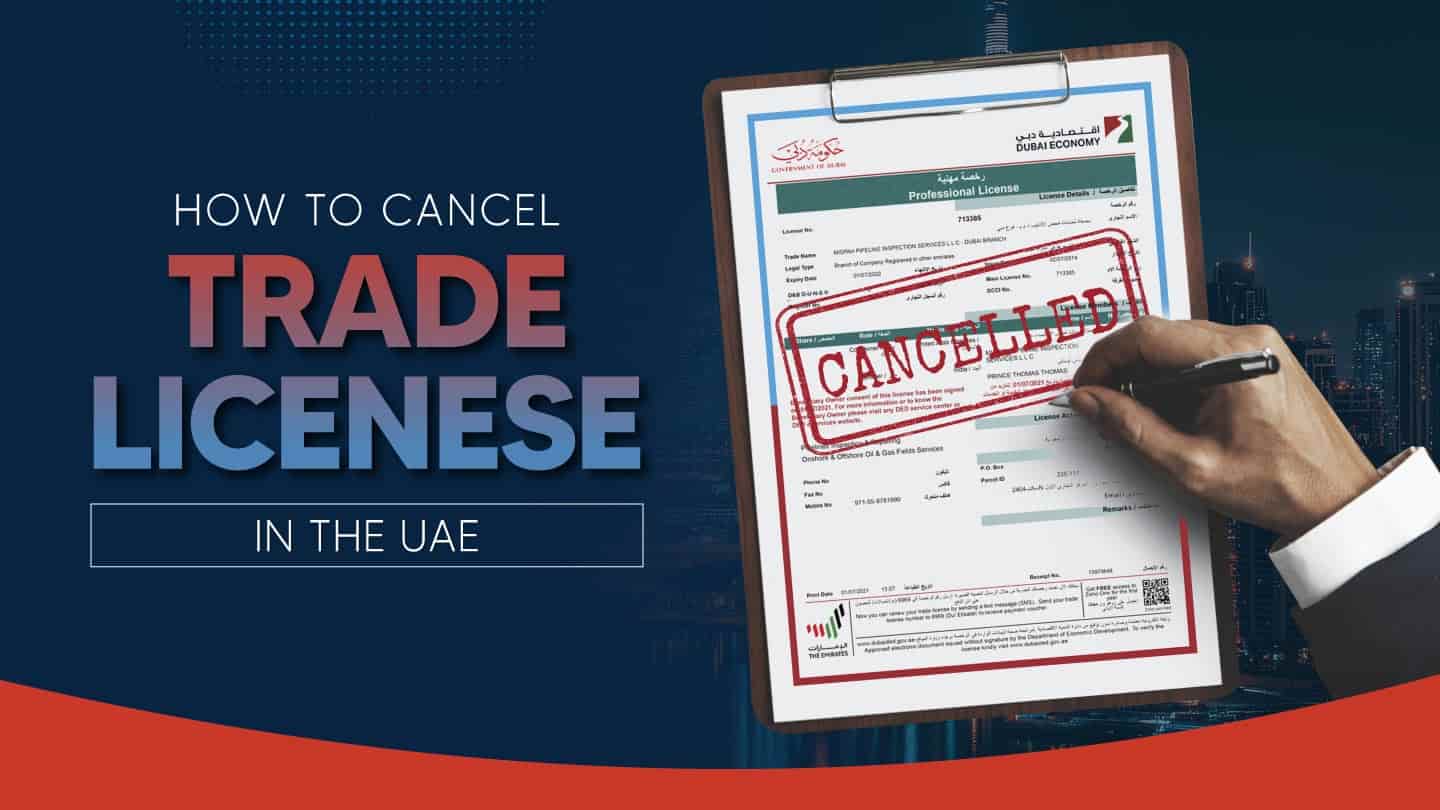
Closing a business is often seen as the end of something, but in reality, it’s not always a failure. Sometimes, it’s a smart, strategic decision. Maybe the business didn’t go as planned, or maybe you’re shifting focus, relocating, or starting something new. And that’s completely okay.
If you’re at this stage, understanding how to cancel a trade license in Dubai becomes important. While the process is fairly straightforward, it’s not as simple as just stopping operations. There are a few steps, approvals, and formalities involved to ensure everything is closed properly and without future complications.
What Does Trade License Cancellation Mean?
Trade license cancellation is basically the formal process of officially shutting down your business in Dubai. It’s not just about stopping your operations or closing your office doors, it’s about legally informing the authorities that your business no longer exists.
When you cancel your trade license, you’re essentially removing your company from government records:
- Legal Dissolution: Your business name is removed from the commercial registry of the Department of Economy and Tourism (DET) or the relevant Free Zone authority.
- Termination of Visas: All residency visas sponsored by the company (for both employees and investors) must be officially cancelled.
- Settlement of Liabilities: You must prove that all outstanding debts, utility bills (DEWA, Etisalat/Du), and office rents have been paid in full.
- Closing Financials: For many license types, a final Liquidation Audit Report is required to show the company’s assets have been distributed and all accounts are settled.
Why Businesses Cancel Their Trade License
Before diving into the how, it helps to understand the why. Businesses in Dubai cancel their trade licenses for a wide range of reasons:
- The business is no longer profitable or viable
- The owner is relocating to another country
- A merger, acquisition, or business restructuring is underway
- The company is switching from mainland to a free zone (or vice versa)
- Retirement or a shift to a different industry
- Regulatory changes that make the current structure impractical
Whatever your reason, the UAE government requires a formal cancellation, you can’t simply stop operating and walk away. Inactive licenses still accumulate renewal fees, and unresolved trade licenses can affect your credit standing and future visa applications.
Key Requirements Before Cancelling a Trade License
Think of this as your pre-flight checklist. Rushing straight to the cancellation application without clearing these first is the single biggest mistake businesses make. Authorities will send you right back if loose ends remain.
1. Settle All Outstanding Liabilities
This means any unpaid government fees, utility bills, and municipality charges. The Department of Economy and Tourism (DET) or your free zone authority will verify that there are no outstanding dues against your company before proceeding.
2. Cancel Employee Visas and Work Permits
All visas sponsored under your trade license – employees, partners, and even your own residence visa if it’s linked to the company- must be cancelled through the General Directorate of Residency and Foreigners Affairs (GDRFA). This step often takes longer than expected, so start early.
3. Close Your Corporate Bank Account
Your bank will need a No Objection Certificate (NOC) or confirmation of license cancellation in most cases. However, you should inform them early and settle any outstanding loans, credit facilities, or overdrafts tied to the business account.
4. Cancel Your Lease Agreement
Your office or warehouse lease (Ejari registration) must be cancelled or lawfully terminated. The landlord will need to be notified formally, and you’ll need documentation of this for the cancellation application.
5. Obtain NOCs from Relevant Authorities
Depending on your business activity, you may need No Objection Certificates from sector-specific regulators, such as the Dubai Health Authority (DHA) for medical businesses, the Roads and Transport Authority (RTA) for transport-related activities, or the Dubai Tourism and Commerce Marketing (DTCM) for hospitality.
Pro Tip: Keep a clear paper trail throughout this process. Every NOC, visa cancellation receipt, and bank closure confirmation will be requested at some point, usually all at once.
How to Cancel Trade License in Dubai? Step-by-Step Process
Once your pre-requisites are in order, here’s how the actual cancellation plays out for a mainland Dubai business (DED/DET-licensed):
1. Submit Your Cancellation Application
Visit the DET’s website (dubaidet.gov.ae) or head to a DET service centre. Log in to the DET Trader portal, select “Trade License Cancellation,” fill in your details, and upload supporting documents. You can also use the Dubai Now app for parts of this process.
2. Pay Initial Cancellation Fees
You’ll be prompted to pay the applicable cancellation fees at this stage (covered in detail in the next section). Keep your payment receipt, as it’s a critical document for subsequent steps.
3. Publish a Liquidation Notice
Companies with multiple shareholders or certain legal structures (LLCs, for instance) are required to publish a liquidation notice in two UAE-approved newspapers – one Arabic and one English. This gives creditors or interested parties a window (typically 45 days) to come forward with claims.
Note: If your company is an LLC or has multiple shareholders, appointing a licensed liquidator is mandatory.
4. Submit Final Documents to DET
After the newspaper notice period, compile your full document package, including all NOCs, visa cancellation proof, bank account closure letter, lease cancellation, and the newspaper publications, and submit them to DET for final review.
5. Receive Your Cancellation Certificate
Once DET verifies everything, they’ll issue an official Trade License Cancellation Certificate. This document is your formal proof that the business has been dissolved and is no longer legally active.
Note: The entire process can take anywhere from 3 to 8 weeks for a straightforward mainland license, and longer if you have outstanding disputes, unpaid dues, or complex shareholding structures. Free zone cancellations have their own timelines set by each authority.
Documents Required for Trade License Cancellation
When it comes to cancelling a trade license in Dubai, paperwork plays a bigger role than most people expect. Here’s what you’ll typically need:
- Trade License copy
- Memorandum of Association (MOA)
- Shareholders’/Partners’ resolution for company closure
- Passport copies of owners/partners
- Emirates ID copies of owners/partners
- Visa cancellation proofs (employees, partners, dependents)
- Clearance certificates/NOCs (utilities, landlord, banks, etc.)
- Liquidator’s report (if applicable)
- VAT deregistration certificate (if applicable)
- Establishment card cancellation proof
Note: The exact documents may vary slightly depending on your business type and jurisdiction (mainland or free zone).
Trade License Cancellation Costs in Dubai
One of the most searched questions we hear is: “What’s the trade license cancellation cost in Dubai?” The honest answer is that it depends on several variables. The Dubai trade license cancellation fees for a typical small-to-medium business often land somewhere between AED 3,000 and AED 8,000, excluding any outstanding dues or legal disputes. If you’ve let the license lapse without renewing for a year or more, penalties can add significantly to this figure.
Free zone cancellation costs vary by authority. DMCC, DIFC, JAFZA, IFZA, and Dubai Silicon Oasis all have their own fee schedules, expect to pay between AED 5,000 and AED 15,000 depending on the zone and your company structure.
Here’s a practical breakdown of what to expect.
| Fee Type | Approximate Cost (AED) |
|---|---|
| DET Application Fee | AED 200 – 500 |
| Newspaper Publication (x2) | AED 1,500 – 3,000 |
| PRO/Typing Services | AED 300 – 800 |
| Visa Cancellation (per visa) | AED 100 – 200 |
| Legal/Notarisation Fees | AED 500 – 2,000 |
| Outstanding Renewal Penalties | Variable |
Mainland vs. Free Zone — What Changes?
The broad steps are the same: Clear liabilities, cancel visas, and submit paperwork, but there are meaningful differences between cancelling a mainland DET license and a free zone license.
Mainland (DET) License:
Governed by the DET, mainland cancellations require newspaper publication for most business types and go through a centralised government process. The DET Trader portal handles much of this digitally, making it more straightforward than it used to be.
Free Zone License:
Each free zone has its own authority and its own process. DMCC requires a Board Resolution and a specific de-registration form. DIFC operates under a separate legal framework with its own courts. JAFZA has different documentation requirements. Always check with your specific free zone authority before assuming the process mirrors the mainland.
In both cases, though, one thing remains constant: outstanding visa cancellations are always dealt with first. Immigration will not clear a company with active sponsored visas still on record.
Common Mistakes to Avoid
Cancelling a trade license in Dubai is fairly structured, but small oversights can turn it into a long, frustrating process. Here are some common mistakes you’ll want to avoid:
- Not cancelling employee visas first: This creates a bottleneck that delays everything else.
- Forgetting sector-specific NOCs: This is especially relevant for regulated industries like healthcare, education, and food & beverage.
- Assuming inactivity equals cancellation: An inactive business still owes annual renewal fees until formally cancelled.
- Leaving the Ejari unterminated: An open lease registration can stall your application.
- Not keeping copies of all submitted documents: If something gets queried weeks later, you’ll need them.
- Ignoring newspaper publication deadlines: Missing the publication window restarts the waiting period.
Closing Your Business? Do It Right with Shuraa
Closing your business isn’t the end of the road; it’s just a change in direction. Sometimes things don’t work out the way we planned, and sometimes we simply outgrow what we started. Either way, what matters is exiting the right way – clean, compliant, and stress-free.
And honestly, you don’t have to do it all alone. With professional support, the entire process becomes much more manageable – from start to finish. Shuraa can guide you through every step, helping you avoid delays, penalties, and unnecessary hassle, so you can close this chapter properly and step into whatever comes next with clarity.
Further Reading
Frequently Asked Questions (FAQs)
1. Can I cancel my trade license online?
Yes, the DET Trader portal allows you to initiate and manage most of the cancellation process digitally. Some steps, like document submission for complex structures, may still require a physical visit.
2. How long does the cancellation take?
For straightforward mainland businesses, expect 4 to 8 weeks once all pre-requisites are cleared. Complicated cases, such as multi-shareholder LLCs, disputed debts, or businesses with many visa holders, can take several months.
3. What happens if I don’t cancel and just stop operating?
Your license renewal fees will continue to accumulate. After a certain period, the DET or the relevant authority may blacklist the business owner, which can affect future business registrations and UAE visa applications.
4. Can I cancel a trade license with unpaid fines?
No. All outstanding fines and fees must be settled before the cancellation can proceed. This includes municipality charges, DET penalties, and any unpaid utility bills registered to the company.
5. Do I need a lawyer to cancel my trade license?
Not necessarily. Many small businesses manage the process themselves or through a PRO (Public Relations Officer) service. However, if your company has shareholders, investors, or outstanding legal disputes, legal counsel is strongly advisable.
6. Is it mandatory to appoint a liquidator?
It depends on your business structure. Companies like LLCs typically require a liquidator, while sole establishments may not.