

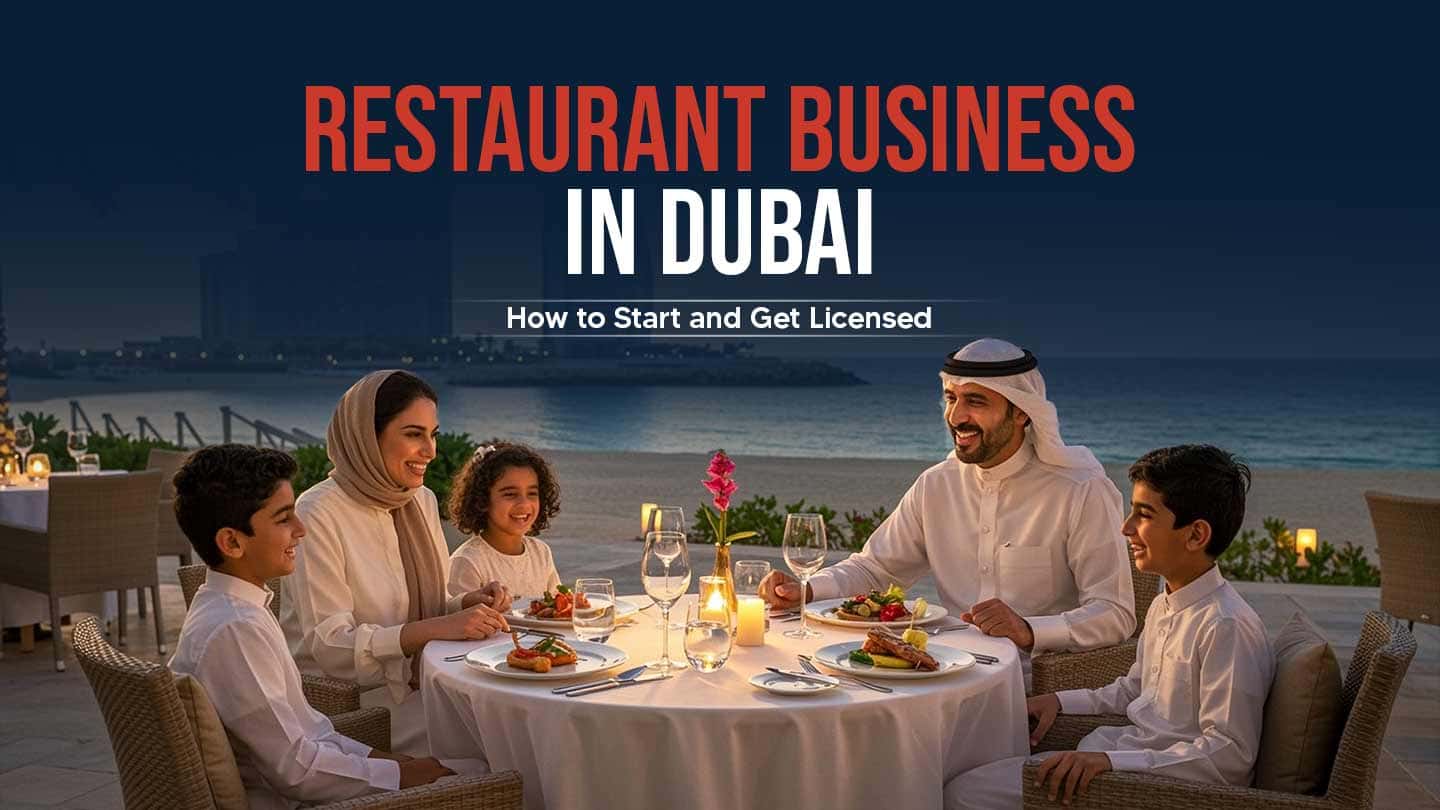
Dubai’s food scene is on fire in 2026, and if you’ve ever dreamed of running your own restaurant, now’s the time to make it happen. The UAE’s food and beverage (F&B) industry is growing faster than ever, expected to reach over USD 23 billion this year, with thousands of new restaurants joining the mix.
Why is this happening? Simple – Dubai draws millions of visitors each year, a huge expatriate community from over 200 nationalities calls it home, and residents love dining out. According to the Dubai Department of Economy and Tourism’s Gastronomy Industry Report, the city has already around 13,000 cafés and restaurants and ranks second worldwide for restaurant density.
So, why is 2026 the right time to open a restaurant in Dubai? Because demand is high, the audience is diverse, and economic momentum is strong. New dining formats (from cloud kitchens to gourmet experiences) are gaining traction.
If you’ve got a great idea and passion for food, Dubai is ready to serve you the opportunity. Let’s walk you through how to open a restaurant in Dubai – step by step.
Why Opening a Restaurant in Dubai Just Makes Sense
Here’s why entrepreneurs and chefs from around the globe are choosing Dubai to launch their dream restaurants:
- A Diverse Market with Global Tastes: Dubai is home to over 200 nationalities, which means your restaurant can attract a truly global audience. Whether it’s Indian, Japanese, Italian, or fusion, there’s always a hungry crowd ready to try something new.
- High Tourist Footfall All Year Round: With over 17 million international visitors in 2024 (as per Dubai’s Department of Economy and Tourism), the city enjoys a constant inflow of tourists looking for memorable dining experiences. That means steady business, especially in prime areas like Downtown Dubai, Dubai Marina, JBR, and Palm Jumeirah.
- Strong Dining-Out Culture: Eating out is a way of life in Dubai. From Friday brunches to late-night shawarma runs, residents here love dining out, often several times a week. This habit keeps the restaurant business booming year-round, regardless of the season.
- Booming Food Delivery and Cloud Kitchen Market: The rise of online food delivery has made it easier to reach customers beyond your restaurant’s walls. Platforms like Talabat, Deliveroo, and Careem Eats have turned cloud kitchens into one of Dubai’s fastest-growing F&B segments.
- High Spending Power and Lifestyle Demand: Dubai’s residents have a high disposable income and a strong appetite for premium dining experiences. From luxury fine dining to Instagram-worthy cafés, there’s a market for every concept, as long as it’s done with quality and creativity.
License & Regulatory Requirements to Open a Restaurant in Dubai
Before you start serving customers, you’ll need to make sure your restaurant meets all the legal and safety requirements set by Dubai’s authorities.
a) Trade License from DET or Free Zone Authority
Your trade license is the first and most important step in setting up your restaurant.
- If you’re opening in Dubai Mainland, you’ll apply for the license through the Dubai Department of Economy and Tourism (DET).
- If you’re opening in a Free Zone, you’ll need to apply through the respective Free Zone authority.
You can choose between:
- Commercial License: If you are planning for full-scale restaurant operations.
- Professional License: If you are planning for catering services or smaller setups like cafés.
- This license legally allows you to carry out food and beverage activities in Dubai.
b) Food License from Dubai Municipality
Once you have your trade license, you’ll need a food license from the Dubai Municipality. his approval ensures your restaurant meets all health, hygiene, and safety standards.
To get this license, you’ll need to submit:
- Your restaurant’s layout plan
- Menu details
- Kitchen and storage design
- Proof of equipment and ventilation systems
Dubai Municipality reviews these to confirm your restaurant follows the Food Safety Department’s regulations before you can officially operate.
c) Additional Approvals and Clearances
Depending on your restaurant’s size and location, you might also need:
- Ejari (Tenancy Contract): Proof that your restaurant space is legally rented or leased.
- Food Safety Department Approval: For food handling, storage, and preparation compliance.
- NOC from Dubai Civil Defence: To verify your restaurant meets fire safety and emergency standards.
- Pest Control and Health Department Clearance: To ensure your premises are safe, clean, and pest-free.
Getting professional help can save you time and stress. Shuraa’s team can handle all these applications and approvals for you – from trade and food licenses to municipality inspections.
Types of Restaurants You Can Open in Dubai
Before applying for the licenses, it’s important to decide what kind of restaurant you want to open. Here are some popular restaurant types in Dubai to help you choose:
- Fine Dining Restaurant: Think luxury interiors, curated menus, and a premium dining experience. Fine dining restaurants attract high-spending customers but come with higher setup and operational costs.
- Casual Dining Restaurant: Perfect for families and working professionals. These restaurants offer quality food in a relaxed environment, great for steady daily footfall and repeat customers.
- Café or Bistro: This is ideal for smaller spaces and lighter menus – think coffee, desserts, and quick bites. Cafés are easier to start with lower overhead costs and are popular among Dubai’s young crowd and digital nomads.
- Fast Food or Quick Service Restaurant (QSR): If you want high turnover and fast-paced service, a QSR could be the way to go. Dubai’s busy lifestyle and strong delivery culture make this model highly profitable.
- Food Truck or Kiosk: For entrepreneurs looking for flexibility and lower investment, food trucks or kiosks are great options. You can participate in food festivals, events, or set up in busy zones across the city.
- Cloud Kitchen: A fast-growing trend in Dubai’s F&B scene, cloud kitchens don’t need a dining area. You operate purely online through delivery platforms like Talabat or Deliveroo. It’s cost-effective and perfect for testing new food concepts.
How to Open a Restaurant in Dubai? Step-by-Step
Opening a restaurant in Dubai can seem like a lot of work, but once you understand the process, it’s quite straightforward. Here’s a simple step-by-step guide to help you get started the right way:
1. Choose Your Restaurant Concept and Name
Start with a clear idea – what type of restaurant do you want to open? Fine dining, café, or cloud kitchen? Your concept will determine your menu, design, and target audience.
Also, choose a unique restaurant name that fits your brand and follows the naming guidelines set by the Dubai Department of Economy and Tourism (no offensive words or religious references).
2. Decide Your Business Structure and Location
Next, select your business structure. Most restaurants in Dubai operate as a Limited Liability Company (LLC). Then, choose where you want to set up – Mainland (through DET) or Free Zone (through the respective authority). Your location will affect license type, ownership, and rent costs.
3. Apply for Initial Approval
Submit your application for initial approval from the DET or Free Zone authority. This confirms that your restaurant activity is allowed and gives you permission to proceed with the next steps, like leasing space and preparing documents.
4. Secure a Restaurant Space and Get Ejari
Find a suitable commercial space that meets Dubai Municipality’s food safety regulations (proper ventilation, drainage, and waste disposal systems). Once the lease is finalized, register it with Ejari to get your tenancy contract — a must-have for your trade license.
5. Submit Layout for Food Safety Approval
Before fitting out your restaurant, submit your kitchen and floor layout to the Food Safety Department of Dubai Municipality.
They will check for hygiene standards, equipment placement, and storage areas before approving your design.
6. Apply for the Main Trade Licenses (Restaurant License)
Submit all accumulated documents (Initial Approval, reserved Trade Name, notarised MOA, and the Ejari contract) and pay the official license fees to receive your final Trade License. This license is the legal foundation for your business operations.
7. Get the Mandatory Food Establishment License
This is the most critical food-specific permit. Once your fit-out is complete (or nearly complete), the Dubai Municipality (Food Control Department) will conduct a thorough on-site inspection. They check compliance with the approved kitchen layout, hygiene standards, and food handling procedures before issuing the final Food Establishment License.
8. Obtain Additional Approvals (If needed)
Depending on your setup, you may need extra approvals such as:
- Dubai Civil Defence (fire and safety)
- Pest Control & Health Department Clearance
- Signboard permit from Dubai Municipality
9. Hire Staff and Process Their Visas
You can now start recruiting chefs, servers, and other staff. Once hired, apply for employee visas and labour cards under your restaurant’s trade license.
10. Design, Furnish, and Equip Your Restaurant
Fit out your restaurant according to your approved layout. Install kitchen equipment, furniture, POS systems, and signage. Make sure all finishes meet safety and hygiene standards.
11. Marketing and Grand Opening
Once all approvals are in place, it’s time to launch! Use social media, influencer marketing, and delivery platforms to promote your restaurant. A soft opening before your grand launch can also help you fine-tune operations and menu items.
Remember: Working with a business setup expert like Shuraa Business Setup can save you weeks of paperwork and follow-ups. Contact us today!
Dubai Municipality Guidelines for Restaurants
Here’s what every restaurant owner should know before starting:
Location & Building Requirements:
- The restaurant must be located in a commercial area approved by the Dubai Municipality.
- The layout and design plan of the restaurant must be pre-approved by the Food Safety Department.
- The kitchen must be large enough to handle operations safely (typically at least 30–40% of the total area).
- Walls, floors, and ceilings should be made of washable, non-absorbent materials to maintain hygiene.
Food Safety and Handling (Operational Requirements):
- Cooking: Internal temperature of food must reach at least 75°C (e.g., poultry).
- Hot Holding: Cooked food must be held hot at or above 60°C.
- Cold Holding/Chilling: Cold food must be held at or below 5°C.
- Freezing: Frozen food must be stored at -18°C or lower.
- The 2-Hour Rule: Cooked food left between 5°C and 60°C for more than two hours must be discarded.
- Thawing: High-risk frozen foods must be thawed safely under refrigeration or cold running water, ensuring the warmest portion does not rise above 5°C.
- HACCP: While specific HACCP certification is not always mandatory for small outlets, all operations must implement and document a risk-based food safety management system based on HACCP principles.
Staff Hygiene & Safety:
- All food handlers must undergo food safety training approved by the Dubai Municipality.
- Staff should wear clean uniforms, gloves, and hairnets while working.
- Regular medical check-ups are required to ensure staff are fit to handle food.
- First-aid kits and fire safety equipment must be easily accessible at all times.
General Cleanliness & Maintenance:
- The restaurant should be cleaned and sanitised multiple times a day, especially during peak hours.
- Adequate hand-washing stations with soap and disposable towels are mandatory.
- Periodic inspections by Dubai Municipality are conducted to ensure compliance; non-compliance can result in fines or temporary closure.
Estimated Cost of Opening a Restaurant in Dubai
The cost to open a restaurant in Dubai varies dramatically based on your concept (a small café versus a large fine dining venue) and your chosen location (a prime spot in Downtown versus a commercial area in Al Quoz).
Here is a detailed breakdown of the major startup expenses you must budget for:
| Expense Category | Estimated Cost (AED) | Notes |
|---|---|---|
| Trade License (DET) | AED 15,000 – 30,000 | Annual fee, varies by jurisdiction (Mainland vs. Free Zone) and business activity. |
| Food Establishment License | AED 8,000 – 15,000 | Issued by Dubai Municipality; covers food safety, compliance, and inspections. |
| Trade Name & Initial Approval | AED 1,500 – 4,000 | Reservation and processing fees. |
| Civil Defence (Fire Safety) NOC | AED 1,500 – 5,000 | Required for all fit-out approvals. |
| Additional Permits (e.g., Liquor/Shisha) | AED 25,000 – 100,000+ | Optional, but adds significantly to cost and compliance complexity. |
| Visa Costs (for 4-5 employees) | AED 20,000 – 40,000 | Includes medical, Emirates ID, and residency stamping (approx. AED 5,000–7,000 per visa). |
| Total Estimated Licensing & Legal | AED 70,000 – 210,000+ | (Excluding the high-end liquor license.) |
What This Means for Different Concept Sizes
- Small café or delivery-only kitchen model: You might aim for the lower end of the spectrum (AED 200,000-400,000) if you choose a modest location, minimal dine-in space and limited staff.
- Mid-sized casual dining restaurant: Budget closer to AED 400,000-800,000 depending on finishes, location, and menu.
- Luxury or fine-dining restaurant: If you’re going for a prime location, high-end décor, large kitchen, large staff, possibly an alcohol licence, you could easily be looking at AED 1 million+ or much more.
Read more Insightful Articles:
- Restaurant License in Dubai: Costs, Requirements
- How to Open a Cafeteria in Dubai
- Start A Coffee Shop Business in Dubai
- Open a Restaurant in Abu Dhabi
Frequently Asked Questions (FAQs)
1. Can a foreigner own 100% of a restaurant business on the Dubai Mainland?
Yes. Recent UAE legal reforms allow foreigners to own 100% of a mainland Limited Liability Company (LLC) for most commercial activities, including restaurants.
2. How can I open a restaurant in Dubai?
To open a restaurant in Dubai, you’ll need to choose your business location (mainland or free zone), get a trade license from the Department of Economy & Tourism (DET) or the respective authority, and obtain a food license from Dubai Municipality. You’ll also need approvals for layout, safety, and hygiene before starting operations.
3. Can I use an office space as a restaurant in Dubai?
No, you cannot. Restaurants in Dubai must operate from a commercial space approved for food activities by Dubai Municipality. The premises must meet specific requirements for ventilation, drainage, kitchen size, and safety standards.
4. How much does it cost to open a restaurant in Dubai?
The cost depends on your concept, size, and location. On average, you can expect to invest between AED 400,000 and AED 1 million to cover licensing, rent, fit-out, equipment, and staff costs. Small cafés or delivery kitchens may start for less.
5. Do I need a separate license to offer food delivery services?
Yes. If you plan to use your own fleet for delivery, you will need a separate Vehicle Permit for each vehicle from the relevant authority (e.g., RTA). Even if you use third-party apps (like Talabat or Deliveroo), your Food License must cover the logistical standards for safe food transportation.
6. Is food safety training mandatory for all staff?
Yes. Food safety compliance is strictly enforced under the Dubai Food Code. All food-handling employees must obtain a Health Card (after a medical fitness test), and every establishment must have a Person-in-Charge (PIC) who is certified through a DM-approved training program.
Start Cooking Your Business Dream in Dubai
Dubai’s dining scene is filled with too many opportunities – new cafés, quirky food trucks, and elegant restaurants are popping up everywhere. If you’ve ever dreamed of owning your own restaurant, this is your moment to make it happen.
And don’t worry, you don’t have to do it alone. Shuraa Business Setup is here to help you every step of the way. From getting your trade and food licenses to sorting out Dubai Municipality and Civil Defence approvals, visa processing, and helping you find the right business structure and location – we’ve got it all covered.
So, go on, bring your culinary dream to life! Talk to Shuraa’s experts today, and let’s turn your restaurant idea into the next big thing in Dubai’s food scene.
Disclaimer: The information in this post is for general guidance only and may change due to updates in government policies or regulations.