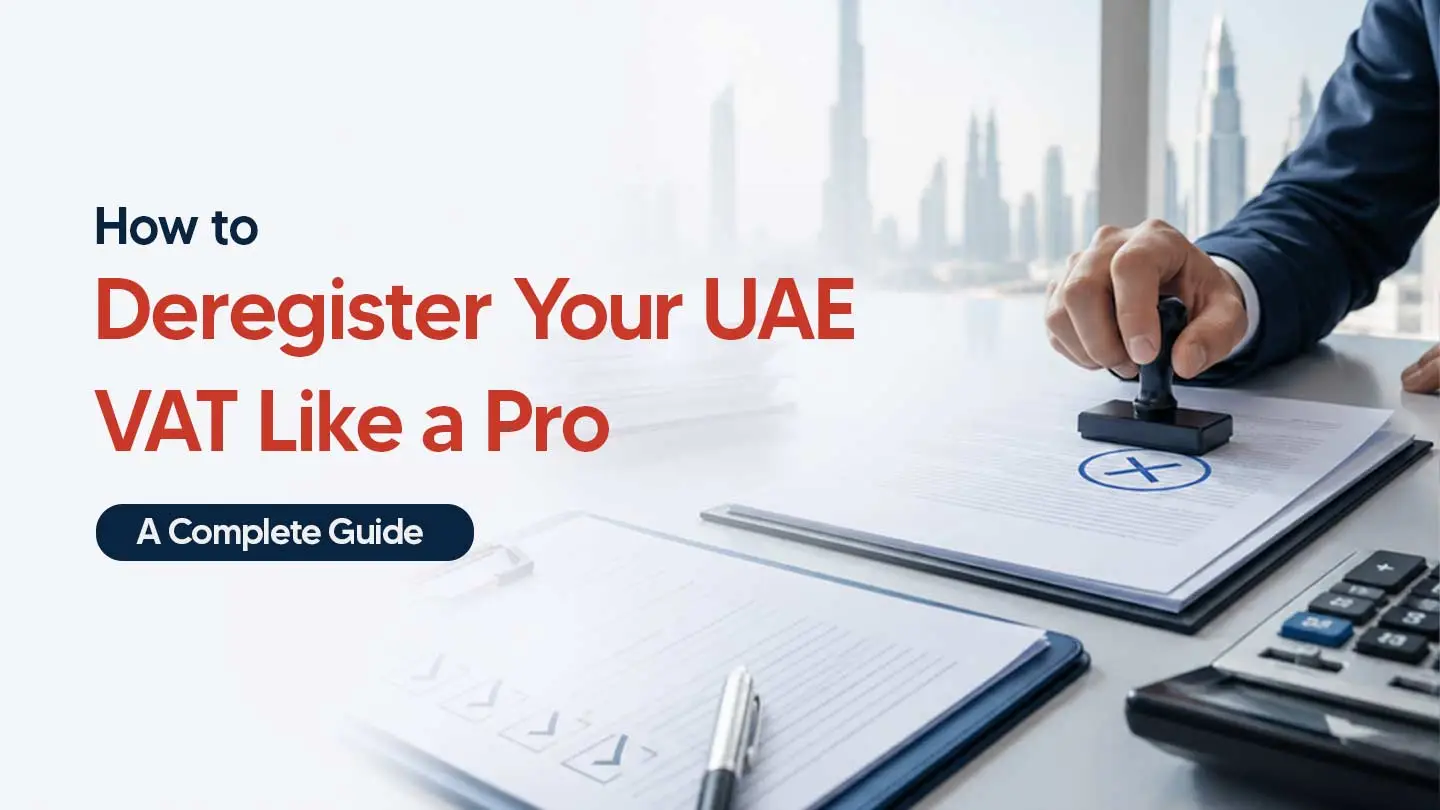
Věděli jste? Zavedení systému daně z přidané hodnoty v SAE (od roku 2018) pomohlo k větší transparentnosti a lepší regulaci podnikatelského prostředí v zemi. Mnoho lidí si však může myslet, že dodržování předpisů o DPH končí registrací. Ve skutečnosti to tak ale není. Společnosti potřebují vědět, kdy a jak dokončit odhlášení z DPH, pokud již nesplňují kritéria pro registraci nebo se rozhodnou přestat vyrábět zdanitelné dodávky.
Pokud se včas neodhlásíte z registrace, může to vést k neustálým požadavkům na podávání přiznání k DPH, zbytečným povinnostem dodržovat předpisy a administrativním sankcím. Ať už ukončujete podnikání, chystáte se k restrukturalizaci nebo váš zdanitelný obrat klesl pod požadovanou hranici, pochopení správného okamžiku pro odhlášení z registrace je stejně důležité jako registrace k DPH.
Tento blog pojednává o zrušení registrace k DPH v SAE, o dokumentech, které k tomu potřebujete, o tom, kdy je povinné nebo volitelné, o celém postupu žádosti a o kritériích způsobilosti, aby vaše společnost mohla dodržovat dohodu o volném obchodu SAE.
Co myslíte tím zrušením registrace k DPH?
Proces, kterým je registrace společnosti k DPH zrušena v rámci dohody o volném obchodu, se nazývá zrušení registrace k DPH. Po schválení žádosti vaše společnost nebude muset nadále vybírat daň z přidané hodnoty z dodávek, které podléhají zdanění, ani pravidelně podávat svá přiznání k DPH.
Zrušení registrace však neznamená, že vaše daňové povinnosti okamžitě skončí. Než Federální daňový úřad schválí vaši žádost, je pro vaši firmu nezbytné:
- Podejte všechna nedoplacená přiznání k dani z přidané hodnoty.
- Zaplatit veškeré pokuty, závazky nebo správní pokuty týkající se daně z přidané hodnoty.
- Vyřešte všechny dosud nevyřízené povinnosti vůči federálnímu daňovému úřadu.
- Veďte záznamy dle potřeby podle daňových zákonů SAE.
Společnosti by se měly ucházet o osvědčení pouze poté, co se ujistí, že splňují podmínky pro způsobilost stanovené Federálním daňovým úřadem.
Kdy musí firmy v SAE požádat o odhlášení z DPH?
Existují 2 scénáře, kdy může společnost požádat o zrušení registrace k DPH v SAE. Jsou to:
- Povinné odhlášení
- Dobrovolné zrušení registrace
Znalost rozdílů je pro společnosti užitečná, aby se vyhnuly sankcím a dodržely daňové předpisy v SAE.
1. Povinné odhlášení z registrace k DPH
Společnost musí podat žádost o zrušení registrace k DPH, pokud:
- Trvale přestává uskutečňovat dodávky, které podléhají zdanění.
- Podnik již není v provozu.
- Neexistuje žádný plán na pokračování v budoucích zdanitelných činnostech.
Federální daňový úřad rovněž vyžaduje, aby společnosti podaly žádost ve stanovené lhůtě poté, co splní podmínky pro povinné zrušení registrace. Pokud tuto lhůtu zmeškáte, může vám být uložena správní sankce.
Představte si například, že máte firmu, která po splnění všech smluv trvale zaniká a v budoucnu nevykonává žádné zdanitelné obchodní aktivity. V takovém případě je pro tuto firmu nutné zahájit proces zrušení registrace, místo aby pokračovala jako registrovaná osoba povinná k dani.
2. Dobrovolné zrušení registrace k DPH
Společnosti by také mohly splnit podmínky pro dobrovolné zrušení registrace, pokud nadále fungují, ale již nesplňují povinný registrační limit.
Obecně platí, když:
- Roční dodávky, které podléhají zdanění, klesly pod povinný limit pro registraci k dani z přidané hodnoty.
- Společnost očekává, že obrat zůstane pod prahovou hodnotou.
- Splňuje podmínky stanovené Federálním daňovým úřadem, pokud jde o dobrovolné zrušení registrace.
Poté, co si to společnosti uvědomí, musí před odhlášením pečlivě vyhodnotit budoucí růst. Pokud se zdanitelný obrat opět zvýší, může být nová registrace k dani z přidané hodnoty povinná.
Pochopení nároku na zrušení registrace k DPH
Je třeba poznamenat, že pokud jde o zrušení registrace k DPH, nemůže každý registrovaný podnik podat žádost okamžitě. Federální daňový úřad posuzuje každou žádost v závislosti na tom, zda jsou splněny všechny zákonné náležitosti.
Obecně se společnosti mohou kvalifikovat, pokud:
- Trvale ukončil zdanitelné činnosti.
- Převedli jste vlastnictví prostřednictvím restrukturalizace podniku, která splňuje podmínky.
- Nesplňují povinné podmínky Registrace k dani z přidané hodnoty už žádný práh.
- Splnili všechny své neuhrazené daňové povinnosti.
- Před podáním žádosti jste odevzdali zbývající daňová přiznání k dani z přidané hodnoty.
Pokud splňujete tato kritéria pro způsobilost, automaticky to nezaručuje schválení. Před rozhodnutím Federální daňový úřad zkontroluje žádost a podpůrnou dokumentaci.
Současné limity pro registraci k DPH v SAE (2026)
Jako firma se před rozhodnutím, zda chcete zrušit své DIČ v SAE, musíte seznámit s platnými limity daně z přidané hodnoty.
| Typ registrace | Dodávky, které jsou zdanitelné |
| Povinná registrace DPH | 187 500 AED nebo více ročně |
| Dobrovolná registrace DPH | 187 500 AED nebo více ročně |
Pokud vaše zdanitelné dodávky trvale zůstávají pod povinnou hranicí a jste schopni splnit další podmínky, můžete mít nárok na zrušení registrace k DPH v SAE.
Výše uvedené prahové hodnoty stále platí v rámci struktury DPH Spojených arabských emirátů, jak ji spravuje dohoda o volném obchodu.
Požadavky na zrušení registrace v rámci dohody o volném obchodu: Co potřebujete vědět
Před schválením žádosti Federální daňový úřad kontroluje, zda společnosti splnily všechny zákonné povinnosti.
Mezi klíčové požadavky na zrušení registrace v rámci dohody o volném obchodu patří:
1. Podání všech přiznání k DPH
Před podáním žádosti o zrušení registrace je nutné podat každé nevyřízené daňové přiznání k dani z přidané hodnoty. Žádosti s nevyřízenými přiznáními obvykle nebudou zpracovány, dokud nesplníte požadavky na splnění požadavků.
2. Úhrada nesplacených závazků z DPH
Společnosti musí vyúčtovat:
- Daň z přidané hodnoty splatná.
- Pokuty za pozdní platbu.
- Administrativní sankce.
- Jiné nesplacené daňové povinnosti.
Jakákoli částka, kterou nezaplatíte, může vést ke zpoždění schválení.
3. Poskytněte dokumentaci na podporu
V závislosti na důvodu odhlášení může podpůrná dokumentace zahrnovat:
- Zrušení živnostenského oprávnění
- Dokumenty pro uzavření firmy
- Účetní závěrka
- Důkazy o zastavení zdanitelných plnění
- Příslušná podniková usnesení, ať už kdekoli
- Relevantní firemní usnesení, kdekoli je to relevantní
Federální daňový úřad si v případě potřeby může vyžádat další dokumenty.
4. Vedení daňových záznamů
I po zrušení registrace si společnosti obvykle musí uchovávat záznamy o dani z přidané hodnoty po dobu stanovenou daňovými zákony Spojených arabských emirátů.
Požadavky na zrušení registrace v rámci dohody o volném obchodu jsou užitečné k zajištění toho, aby společnosti splnily své povinnosti z daně z přidané hodnoty předtím, než opustí daňový systém.
Jaké dokumenty jsou potřeba k odhlášení z registrace k DPH?
I když se požadavky na dokumenty mohou lišit v závislosti na povaze podnikání, společnosti jsou obvykle povinny předložit:
- ID společnosti Emirates a kopie pasů oprávněných podepisujících osob.
- Živnostenský list.
- Osvědčení o registraci k DPH.
- Účetní závěrka.
- Podrobnosti o daňovém přiznání k dani z přidané hodnoty.
- Informace o bankovním účtu (pokud je to relevantní).
- Důkaz potvrzující uzavření společnosti nebo snížení zdanitelného obratu.
- Veškeré další dokumenty požadované federálním daňovým úřadem.
Když předložíte úplné a přesné dokumenty, může to výrazně zkrátit zpoždění při zpracování.
Proces zrušení DPH: Podrobný návod
Znalost procesu rušení DPH je pro firmy užitečná při přípravě klíčových dokumentů a vyhnutí se zbytečným zpožděním.
Krok 1: Kontrola způsobilosti
Zjistěte, zda vaše společnost splňuje podmínky pro povinné nebo dobrovolné odhlášení. Před podáním žádosti zhodnoťte svůj nedávný zdanitelný obrat, své potenciální plány pro podnikání a svůj provozní stav.
Krok 2: Dokončení čekajícího souladu s předpisy
Než začnete s procesem zrušení DPH , ujistěte se, že:
- Odeslali jste všechna svá daňová přiznání k dani z přidané hodnoty.
- Zaplatili jste dlužnou DPH.
- Zrušili jste všechny administrativní pokuty.
- Připravili jste si všechny podpůrné dokumenty.
Pouze společnosti, které splňují požadavky, mají šanci získat rychlejší schválení.
Krok 3: Podání žádosti o zrušení registrace na portálu FTA
Po ověření vaší způsobilosti a splnění všech zbývajících daňových povinností navštivte digitální portál FTA a přihlaste se pomocí svého registrovaného účtu. Dále musíte přejít do sekce Daň z přidané hodnoty a zvolit možnost zrušení registrace. Zadejte požadované informace. Patří sem důvod zrušení registrace, datum účinnosti a podrobnosti, které to potvrzují. Nahrajte všechny důležité dokumenty a před podáním žádost důkladně zkontrolujte.
Krok 4: Reakce na jakékoli další žádosti od dohody o volném obchodu
Jakmile bude vaše žádost posouzena, může federální daňový úřad v případě potřeby požádat o doplňující dokumenty nebo vysvětlení. Společnosti by měly na takové žádosti reagovat neprodleně, aby se vyhnuly zbytečným zpožděním při zpracování. Pokud společnosti neposkytnou požadované údaje v požadované lhůtě, může to vést k tomu, že žádost zůstane nevyřízená nebo bude jednoduše zamítnuta.
Krok 5: Získání schválení
Poté, co Federální daňový úřad potvrdí, že jste splnili všechny požadavky pro zrušení registrace k dani z volného obchodu (FTA), schválí vaši žádost a vydá potvrzení o zrušení registrace k DPH.
Od data účinnosti zrušení registrace již společnost nemusí:
- Účtovat daň z přidané hodnoty z plnění, která podléhají zdanění.
- Pravidelně podávat přiznání k DPH (pokud to není zvlášť nutné za minulá zdaňovací období).
- Plnit průběžné registrační povinnosti k dani z přidané hodnoty.
Nicméně je pro společnosti nezbytné uchovávat si daňové záznamy po dobu stanovenou v předpisech Spojených arabských emirátů o DPH.
Typické chyby, kterým se vyhnout při odhlášení z registrace k DPH
Mnoho společností se domnívá, že ukončením své činnosti automaticky skončí i jejich povinnosti týkající se daně z přidané hodnoty. Ve skutečnosti však Federální daňový úřad požaduje, aby společnosti před zrušením registrace k DPH formálně dokončily proces odhlášení z registrace.
Mezi typické chyby patří:
1. Žádost před podáním čekajících daňových přiznání
Žádosti podané s nevyřízenými daňovými přiznáními k DPH obvykle čelí zpožděním nebo jsou zamítnuty.
2. Ignorování neuhrazených závazků z DPH
Společnosti by se měly ujistit, že jsou před podáním žádosti uhrazeny všechny splatné daně z přidané hodnoty, pokuty a správní sankce.
3. Odevzdání neúplných dokumentů
Chybějící podpůrné dokumenty mohou často vést k dalším dotazům ze strany Federálního daňového úřadu, což prodlužuje dobu zpracování.
4. Dřívější odhlášení
Jen málo společností se rozhodne okamžitě zrušit své DIČ v SAE poté, co zaznamenají dočasný pokles tržeb. Pokud však očekáváte rychlé zotavení obratu, nemusí být zrušení registrace nejlepším postupem.
5. Promeškání lhůty pro podání žádosti
Společnosti, které mají nárok na povinné zrušení registrace, musí podat žádost ve lhůtě stanovené federálním daňovým úřadem. Pokud se žádosti podají zpožděně, může to vést k správním pokutám.
Proč je profesionální podpora tak důležitá?
Ačkoliv se celý proces může zdát poměrně přímočarý, odhlášení z registrace k DPH zahrnuje více než jen podání formuláře.
Firmy musí posoudit:
- Zda splňují zákonné podmínky způsobilosti.
- Neuhrazená daň z přidané hodnoty.
- Konečné výpočty pro jejich přiznání k DPH.
- Podpůrné dokumenty.
- Dodržování předpisů (pokud jde o všechny požadavky na zrušení registrace v rámci dohody o volném obchodu).
A právě zde přicházejí na řadu odborní daňoví poradci, jako je Shuraa Business Setup . Podporují firmy tím, že jim pomáhají vyhnout se chybám, které by mohly vést ke zbytečným zpožděním, pokutám nebo v horším případě k zamítnutí žádostí.
Hledáte bezproblémové zrušení registrace DPH ve Spojených arabských emirátech? Věřte Shuraa!
Správné dokončení odhlášení z DPH vyžaduje přesné plánování a úplný soulad s daňovými předpisy Spojených arabských emirátů.
Proto máme v Shuraa Business Setup profesionální daňové poradce, kteří vám celý proces zjednoduší. Pomáhají vám s každým krokem vaší cesty a pomáhají vám s:
- Posouzení vaší způsobilosti, pokud jde o zrušení registrace k DPH v SAE.
- Kontrola stavu dodržování předpisů pro DPH.
- Příprava a podání žádosti o zrušení registrace.
- Zajištění splnění všech požadavků na zrušení registrace v rámci dohody o volném obchodu.
- Koordinační část o dohodách o volném obchodu místo vás.
- Poradenství ohledně dodržování předpisů a povinností po zrušení registrace, pokud jde o vedení záznamů.
Ať už váš zdanitelný obrat klesl pod stanovenou hranici, vaše společnost se ruší nebo prochází restrukturalizací, nabízíme komplexní pomoc, abyste mohli proces zrušení DPH dokončit efektivně a v souladu s předpisy.
Nejčastější dotazy
Otázka č. 1. Co se stane po odhlášení mé registrace k DPH?
Po schválení vaší žádosti nebude vaše společnost uznána jako společnost registrovaná k DPH. To znamená, že nebudete moci:
- Vystavte daňové doklady, které uvádějí daň z přidané hodnoty.
- Provádět výběr DPH od zákazníků.
- Uplatněte si vstupní daň z přidané hodnoty, pokud jde o budoucí obchodní výdaje.
- Prezentujte svou společnost jako registrovanou k DPH.
Společnosti jsou povinny aktualizovat i své faktury, obchodní dokumentaci, účetní systémy a webové stránky tak, aby odrážely jejich nový status plátce daně z přidané hodnoty. Pokud v budoucnu váš zdanitelný obrat opět překročí povinnou hranici registrace, je nutné požádat o novou registraci k dani z přidané hodnoty. Navíc tak musíte učinit ve lhůtě stanovené dohodou o volném obchodu.
Otázka 2. Jak dlouho trvá odhlášení z DPH?
Obvykle to trvá dvacet pracovních dnů. Doba zpracování však závisí na tom, jak přesná je vaše žádost a zda jsou splněny všechny povinnosti týkající se souladu.
Otázka 3. Je možné zrušit DIČ v SAE online?
Ano. Jako společnost máte možnost zrušit své DIČ v SAE. K tomu musíte podat žádost o zrušení registrace prostřednictvím digitálního portálu FTA spolu se všemi potřebnými podpůrnými dokumenty.
Otázka 4. Jak zjistit, zda je poradenská firma oprávněna k odhlášení z registrace k DPH v SAE?
Vždy můžete navštívit jejich oficiální webové stránky, prohlédnout si jejich klientelu a promluvit si s jejich konzultanty, abyste zjistili, zda jsou legitimní a zda vám mohou pomoci s odhlášením z DPH.
Otázka 5. Může mi Shuraa Business Setup pomoci s odhlášením z DPH v SAE?
Ano. Máme odborné konzultanty, kteří důkladně rozumí daňovým zákonům SAE a mohou vám pomoci s odhlášením z DPH v SAE . Pro více informací nám zavolejte na číslo +971 507775554 nebo nám napište e-mail na adresu info@shuraa.com.